The breakthroughs that redefined baseball. From the first batting helmet to composite bats, radar guns to sensor-equipped gear, this exhibit showcases the device innovations where creativity and engineering converged — each milestone marking a turning point in how the game is played and protected.
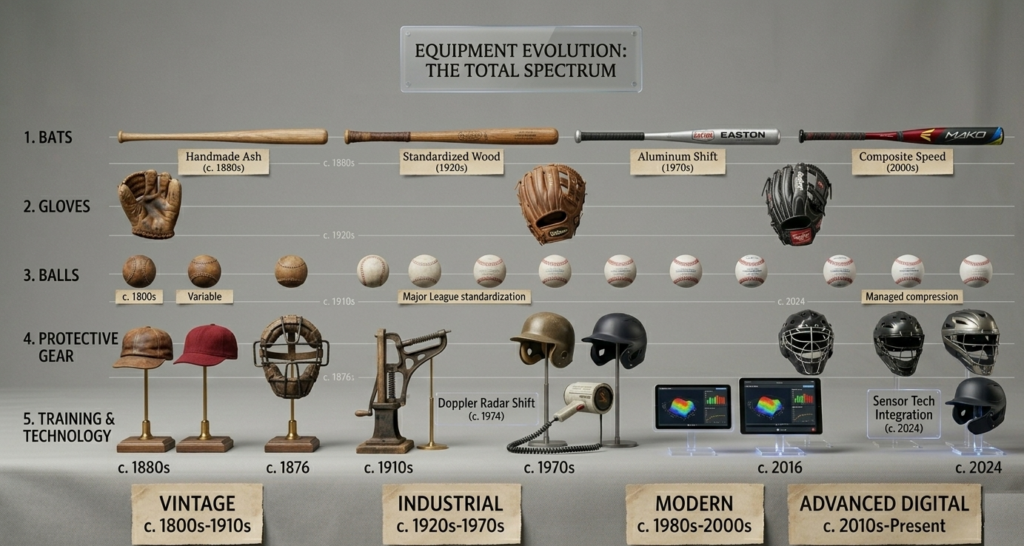
Explore how each major piece of baseball equipment evolved over time and transformed the game.
1. Bats
- 1800s: Early wooden bats, handmade by local craftsmen.
- 1884: Louisville Slugger 125 — mass-produced wooden bat with consistent design.
- 1970s–1980s: Aluminum bats introduced in amateur leagues.
- 2000s: Composite bats like the Easton Mako (2008) improve strength and swing speed.
2. Gloves
- Early 1900s: Minimal leather gloves, little padding.
- 1957: Wilson A2000 Infielder Glove — standardized shape, better durability.
- 1997: Rawlings Pro Preferred Catcher Mitt — advanced design for protection and control.
3. Balls
- 1800s: Early stitched leather balls with variable size and weight.
- Early 1900s: Standardization for Major League Baseball — consistent size, weight, and stitching.
- Modern era: Aerodynamic design and controlled compression for better flight and performance.
4. Protective Gear
- Early helmets: Simple leather caps, minimal protection.
- 2000: Easton Pro Carbon Helmet — modern materials, lightweight, and safer.
- Catcher & umpire gear: Gradual evolution with padding, masks, and chest protectors.
5. Training & Technology (Extension of Equipment Evolution)
- 1975–1980: JUGS Baseball Pitching Machines — automated batting practice.
- Radar guns: Stalker Pro Radar Gun measures pitch speed.
- Batting gloves: Franklin CFX Batting Gloves (2006) improve grip and reduce vibration.
- Modern innovations: Sensors, smart bats, and AI-powered analytics integrate training technology with traditional gear.
6. Baseball Sound Technology
- 1941: Wrigley Field Electronic Organ — First ballpark organ created live music for fans.
- 1970s–1990s: Walk-Up Song Cueing System — Personalized batter music turned introductions into theatrical moments.
- 2005: Microphone-Equipped Baseball Base — Hidden base microphone captured on-field player sounds for broadcast.
- 2011: Neural Surround Sound for Radio Broadcast — Transformed stereo radio into surround sound for listeners.
- 2022: PitchCom Wireless Pitch-Calling System — Catcher silently transmits pitch calls to pitcher’s hidden earpiece.