
Introduction
The baseball bat is one of the most important tools in the game of baseball. Over more than a century, bat designs have evolved through experimentation, craftsmanship, and technological innovation. Changes in materials, manufacturing methods, and player preferences have shaped the bats used in both professional and amateur baseball today. Studying the evolution of the baseball bat provides insight into how sports equipment develops alongside the sport itself.
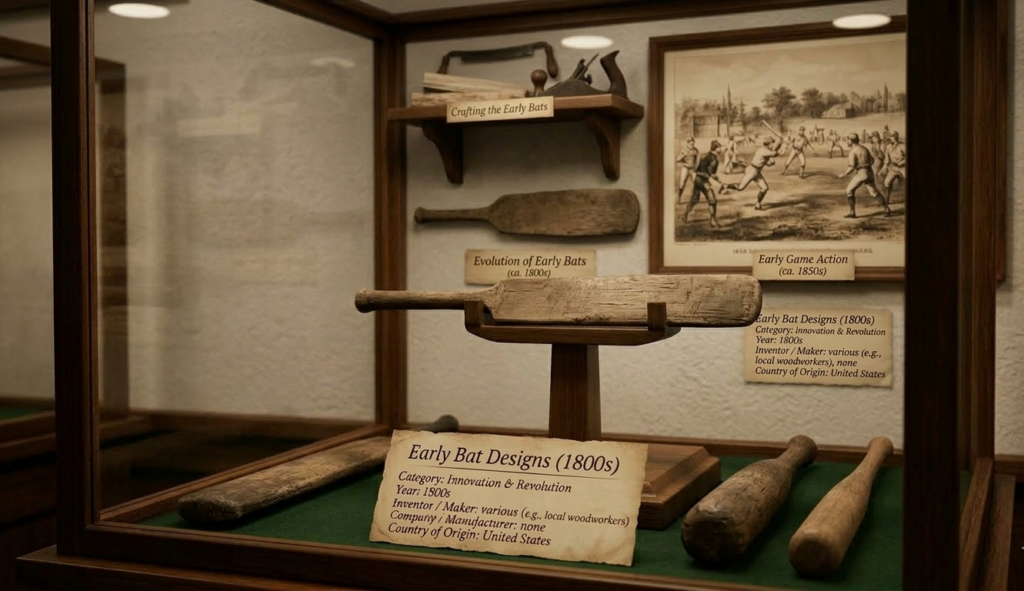
Early Bat Designs (1800s)
In the early years of baseball during the 19th century, bats were not standardized. Players often made their own bats or asked local woodworkers to craft them. Because there were few rules about bat shape or size, early bats came in many different forms. Some bats resembled flat paddles, while others were thicker and heavier, similar to small clubs.
The materials used were typically hardwoods such as ash, hickory, or maple. These woods were chosen for their durability and strength. Players experimented with different lengths and weights to determine what worked best for hitting the ball. This period of experimentation helped shape the basic bat form that would later become standard.
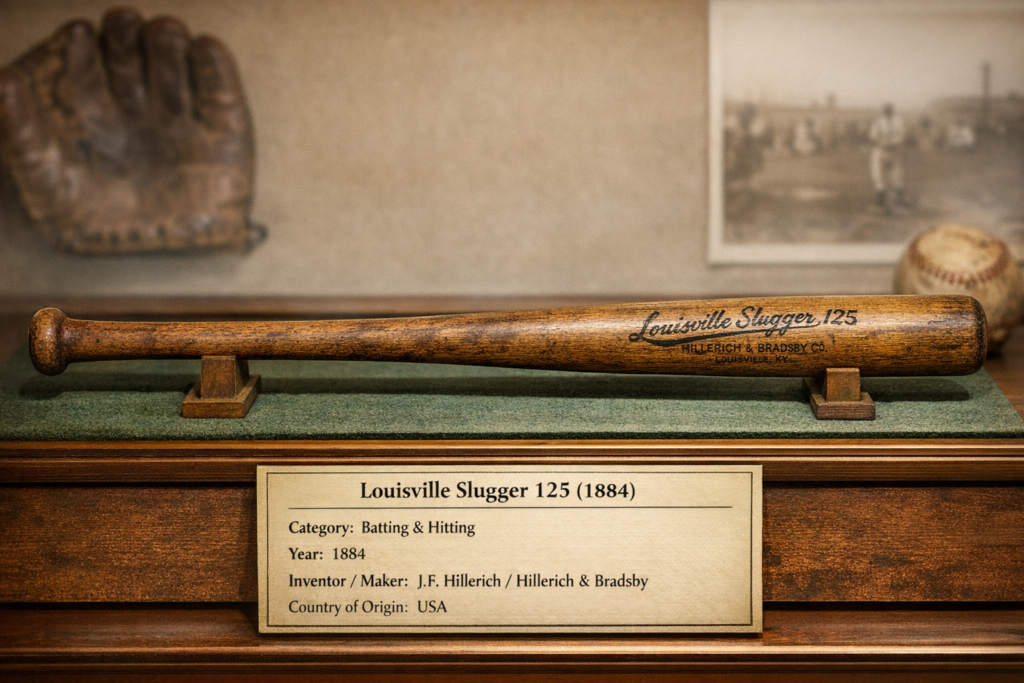
The Rise of Professional Bat Manufacturing (1880s)
A major milestone in baseball bat history occurred in 1884, when the Louisville Slugger bat was produced by the company Hillerich & Bradsby in Louisville, Kentucky. According to baseball history, a young player named Pete Browning requested a custom bat from John Andrew “Bud” Hillerich. After using the bat successfully in a game, demand for professionally made bats increased.
The Louisville Slugger quickly became one of the most recognized baseball bat brands. Professional players began ordering custom bats with specific dimensions, and manufacturers started producing bats with consistent quality and design. This marked the beginning of commercial bat production in baseball.
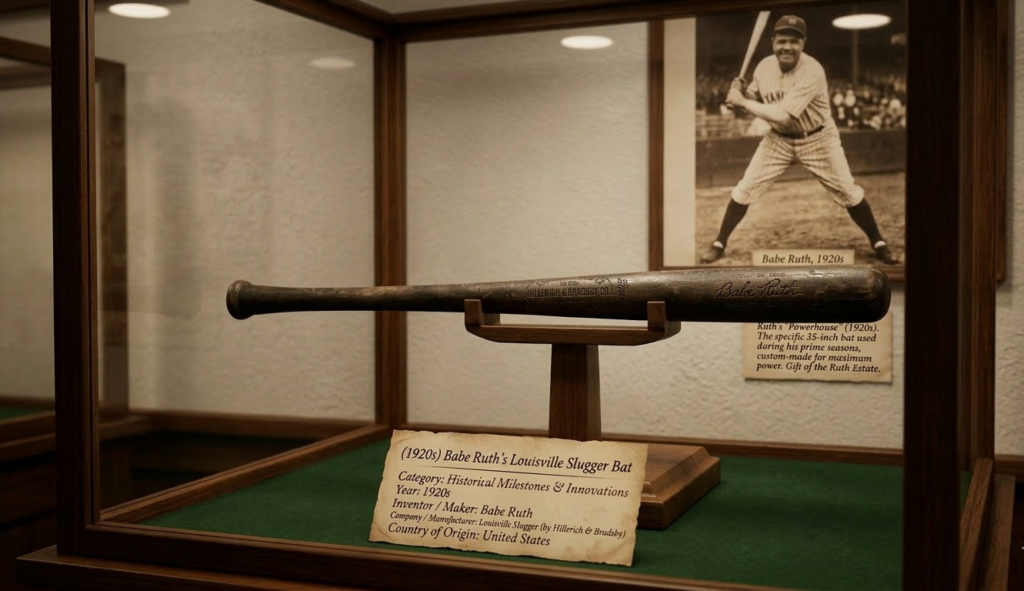
Refinement of Wooden Bats (1900s–1960s)
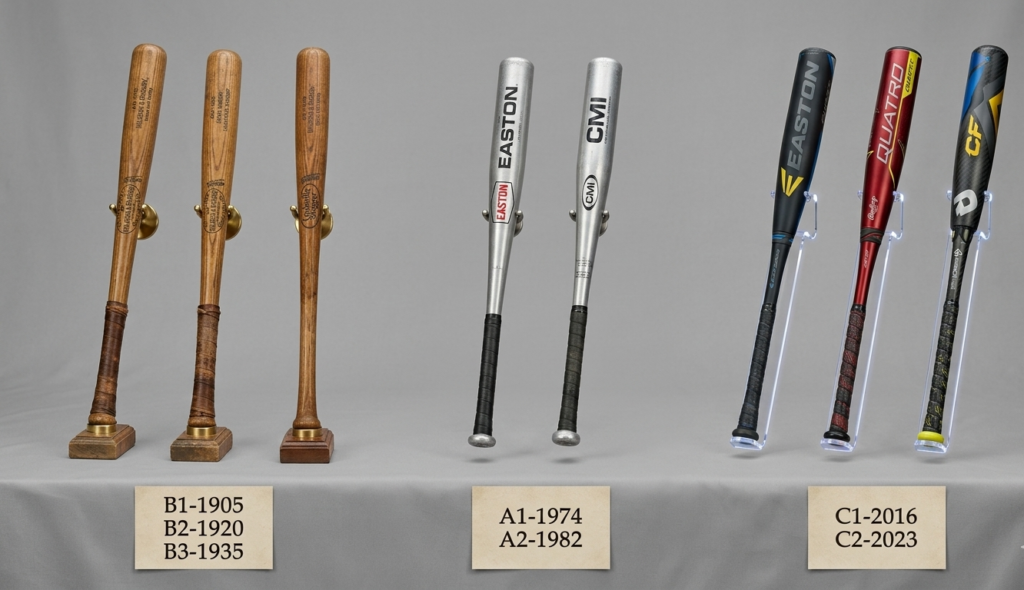
During the early and mid-20th century, wooden bats became standardized equipment in professional baseball. Manufacturers refined their production processes to create bats that were more balanced and durable. Ash wood became especially popular because it provided a good combination of strength and flexibility.
Players began using bats designed specifically for their preferences, including different handle thicknesses, barrel sizes, and overall lengths. Famous players such as Babe Ruth used customized bats that influenced bat designs for future generations.
Even today, Major League Baseball requires players to use wooden bats, preserving the traditional feel of the game.
Introduction of Metal Bats (1970s)
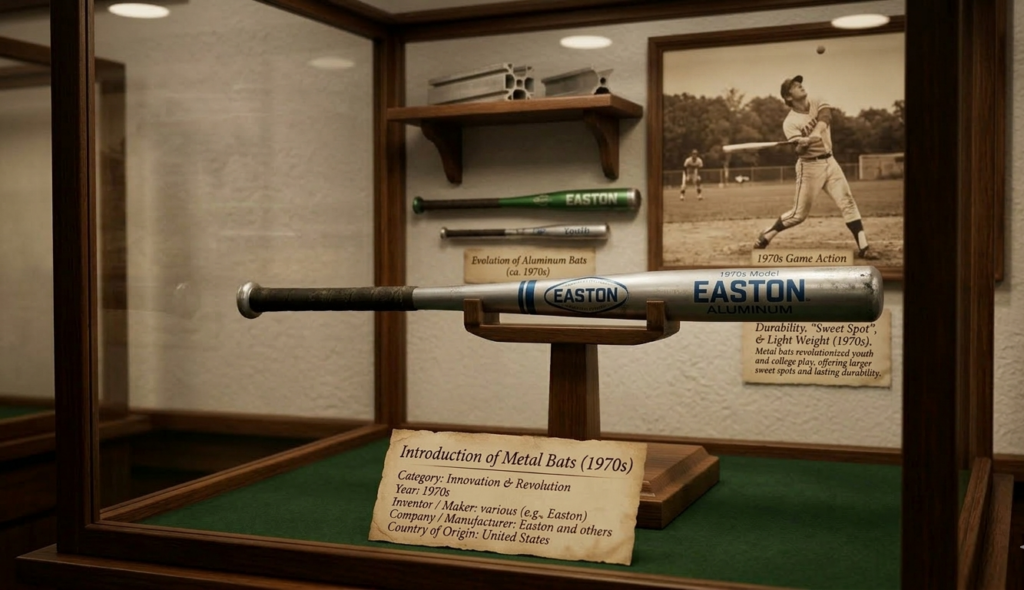
The next major innovation in bat technology occurred in the 1970s with the introduction of aluminum bats. Companies such as Easton began producing bats made from lightweight aluminum alloys.
Aluminum bats offered several advantages:
- Lighter weight compared to wooden bats
- Larger “sweet spot” for better contact with the ball
- Greater durability since metal bats do not break easily
Because of these benefits, aluminum bats quickly became common in college baseball, high school leagues, and youth baseball. However, professional leagues continued to use wooden bats to maintain tradition and game balance.
Composite Bat Technology (2000s–Present)
In the early 21st century, manufacturers introduced composite bats, made from layered materials such as carbon fiber and advanced polymers. These bats allow engineers to control weight distribution, flexibility, and vibration reduction more precisely than traditional materials.
Composite bats often feature:
- Multi-layer barrel construction
- Reduced vibration when hitting the ball
- Improved energy transfer between bat and ball
- Optimized balance for faster swing speed
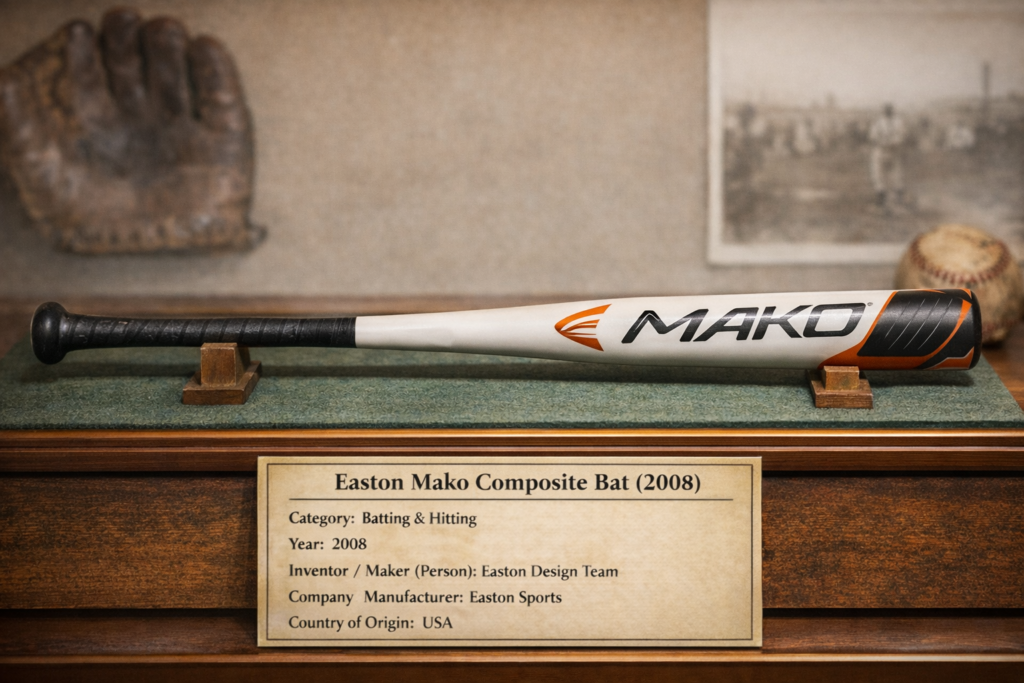
One example is the Easton Mako Composite Bat (2008), which used advanced materials and engineering to enhance hitting performance.
Because some composite bats significantly increased ball speed, baseball organizations introduced regulations to maintain fairness and safety in competition.
Modern Torpedo Bat (2020s): A Data-Driven Revolution
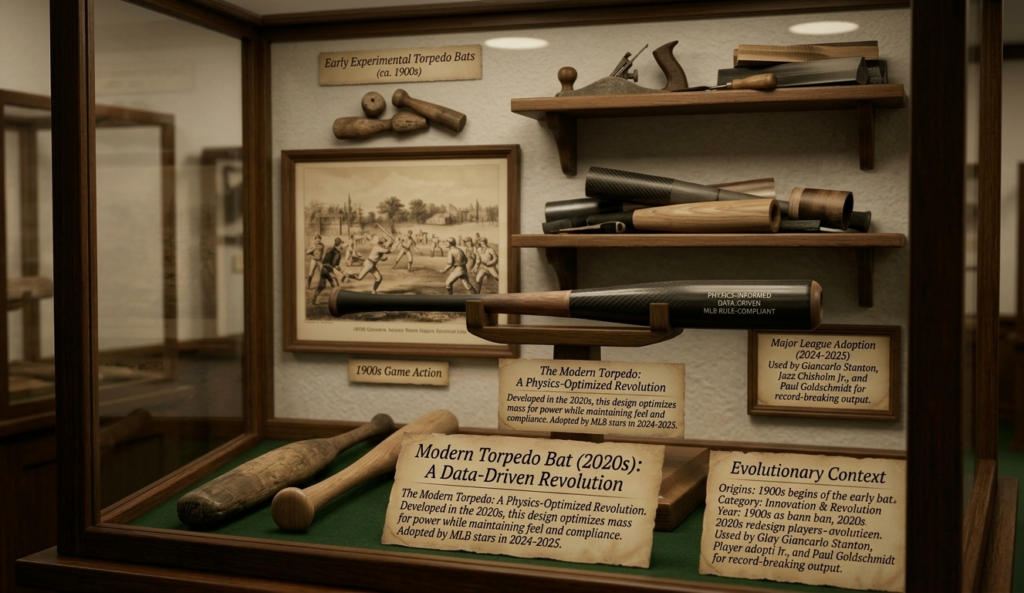
The concept of the torpedo-shaped bat dates back to the early 1900s, when experimental designs appeared in minor and semi-professional leagues. These early torpedo bats featured a tapered shape with a thicker end and narrower handle, intended to increase swing speed and hitting power. While innovative for their time, they were often banned in professional leagues due to safety concerns and inconsistent performance, and they remained largely a historical curiosity.
Fast forward to the 21st century, the modern torpedo bat emerged as the most significant bat innovation since 2000. Developed around 2020 by physics-informed designers and analytics experts, it reimagined the torpedo concept using data-driven principles. Mass is strategically shifted toward the sweet spot, optimizing contact and increasing the likelihood of barreled hits while remaining fully compliant with MLB rules.
Players began testing these bats in 2024, and by 2025, the design gained widespread attention in Major League Baseball. Stars like Giancarlo Stanton, Jazz Chisholm Jr., and Paul Goldschmidt used torpedo bats to produce record-breaking offensive output, demonstrating the real-world impact of this modern innovation.
By connecting the experimental torpedo bats of the 1900s with the physics-optimized modern version, the evolution highlights how ideas from over a century ago can inspire transformative innovations in the game today.
AI-Designed Bats (2026): The Computer as Craftsman
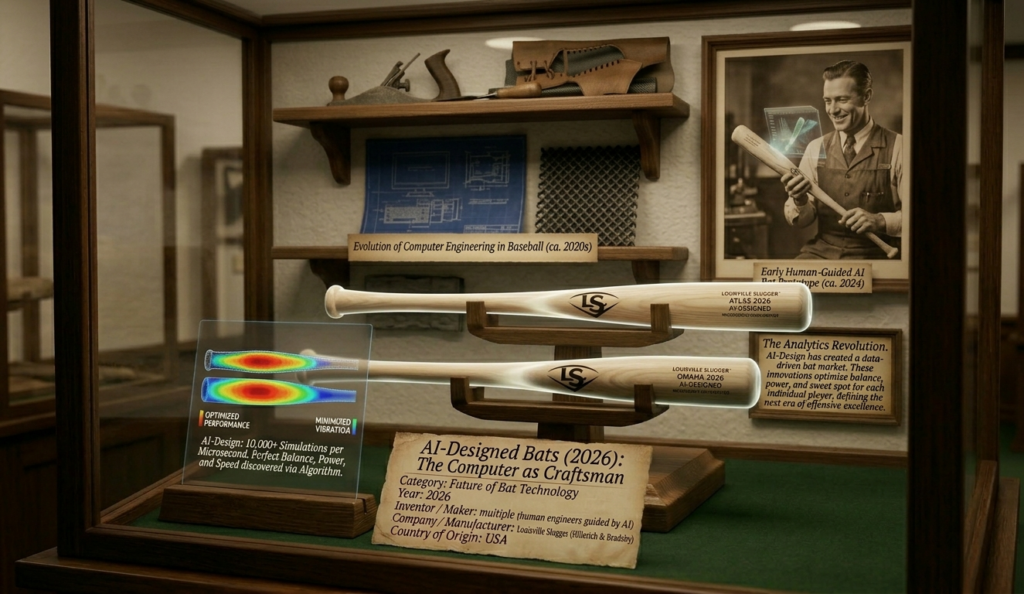
Following the shape revolution of the torpedo bat, Louisville Slugger introduced the first bats engineered through artificial intelligence. The 2026 Atlas and Omaha models use thousands of AI simulations to optimize barrel performance at microscopic levels—analyzing design variations no human could calculate. Unlike previous bats shaped by tradition and trial‑and‑error, these are born from algorithms finding the perfect balance of speed, power, and sweet spot. The human engineer still guides the process, but the AI discovers solutions invisible to the eye. This marks a fundamental shift: the computer has become the craftsman, and bat design will never be the same.
Timeline of Baseball Bat Innovation
The design of baseball bats has evolved significantly over more than a century. Advances in materials, manufacturing techniques, and player preferences have contributed to continuous innovation.
1800s – Early Handmade Bats
Players often made their own bats using hardwood such as ash or hickory. Shapes varied widely because there were few rules governing bat design.
1884 – Commercial Bat Production Begins
The Louisville Slugger bat was produced by Hillerich & Bradsby in Louisville, Kentucky. This marked the beginning of standardized bat manufacturing.
1920s – Standard Wooden Bat Era
Wooden bats became standardized in professional baseball. Ash wood became the most widely used material.
1950s–1960s – Player Customization
Manufacturers began producing bats tailored to player preferences, including different handle thicknesses and barrel sizes.
1970s – Aluminum Bat Revolution
Aluminum bats were introduced and became popular in college and amateur baseball because they were lighter and more durable.
1990s – Improved Alloy Technology
Manufacturers refined metal bat construction, improving durability and expanding the sweet spot.
2000s – Composite Bat Development
Composite materials such as carbon fiber allowed engineers to control flexibility, balance, and vibration.
2020s – Modern Torpedo Bat
Physics-driven, torpedo-shaped bats shift mass toward the sweet spot, enhancing barreled hits. Developed around 2020 using analytics and player feedback, they were tested in 2024 and widely adopted in 2025 MLB games, representing the most significant bat innovation since 2000.
Present – Engineering and Performance Optimization
Modern bats use advanced materials and computer-aided design to optimize swing speed, durability, and safety.
Key Milestones in Baseball Bat Innovation
| Year | Innovation | Description |
|---|---|---|
| 1800s | Handmade Wooden Bats | Players crafted bats from hardwood without standardized design. |
| 1884 | Louisville Slugger Bat | First widely recognized commercially produced baseball bat. |
| 1920s | Standard Wooden Bat Design | Professional baseball adopted consistent bat shapes and materials. |
| 1930s | Player Signature Bats | Manufacturers began producing bats tailored to specific players. |
| 1950s | Improved Wood Processing | Better drying and manufacturing improved bat durability. |
| 1970s | Aluminum Bats Introduced | Lightweight metal bats gained popularity in amateur baseball. |
| 1990s | Advanced Alloy Bats | Stronger aluminum alloys improved performance and durability. |
| 2000s | Composite Bat Technology | Carbon fiber and layered materials enhanced flexibility and power. |
| 2008 | Easton Mako Composite Bat | Example of advanced engineering in bat performance design. |
| 2020 | Modern Torpedo Bat | Torpedo-shaped bat applies analytics to maximize impact and ball distance. |
| Present | Sensor and Data Integration | Training technologies help analyze swing mechanics and bat performance. |
References
Adair, R. K. (2002). The physics of baseball (3rd ed.). HarperCollins.
Nathan, A. M. (2003). Characterizing the performance of baseball bats. American Journal of Physics, 71(2), 134–143.
Thorn, J., & Palmer, P. (1998). The hidden game of baseball. University of Chicago Press.
National Baseball Hall of Fame and Museum. (n.d.). History of baseball equipment. Retrieved from https://baseballhall.org
Louisville Slugger Museum & Factory. (n.d.). History of Louisville Slugger bats. Retrieved from https://www.sluggermuseum.com