
Where Passion Meets Innovation — Three Contributions That Changed the Game
Baseball arrived in Korea in the early twentieth century, introduced by American missionaries. Over the following decades, it evolved from a colonial-era pastime into the nation’s most beloved sport. The founding of the Korea Baseball Organization (KBO) in 1982 marked a watershed moment: a fully professional league backed by major conglomerates, rooted in cities across the peninsula, and built to grow in step with the Korean economy. Today, KBO attracts over 8 million fans per season and has emerged as a global reference point for fan engagement, sports technology adoption, and league management innovation. This gallery tells the story of Korea’s three most distinctive and lasting contributions to the world of baseball.
This table 1 provides a comprehensive overview of Korea’s three pioneering baseball innovations — the KBO Cheer Culture, the Automated Ball-Strike System (ABS), and the Corporate-Regional Founding Model — including their scope, key milestones, and global impact.
Table 1. Gallery Overview
| Item | Details |
|---|---|
| Gallery Full Title | Korea Baseball Innovation Museum — Three Contributions That Changed the Game (1982 – Present) |
| Time Span | 1982 – Present |
| Three Core Innovations | #1 KBO Cheer Culture (Redefining Baseball as a Participatory Experience), #2 Automated Ball-Strike System (World’s First Full-Season Deployment in a Top-Level Pro League), #3 Corporate-Regional Founding Model (Corporate Investment + Regional Identity as a Sustainable Growth Engine) |
| Core Impact | Transformed Korean baseball from a colonial-era pastime into a global reference point for fan engagement, sports technology adoption, and league management innovation |
| Key Milestones | 1982 (KBO founded with 6 teams), 1990s-2000s (Cheer culture formalized), 2024 (ABS deployed across all games), Present (10 teams, 8+ million annual attendance) |
| Uniqueness | A nation that turned baseball into a festival with participatory fan culture, adopted robot umpires before any other major league, and built a sustainable corporate-regional model that enabled rapid growth |
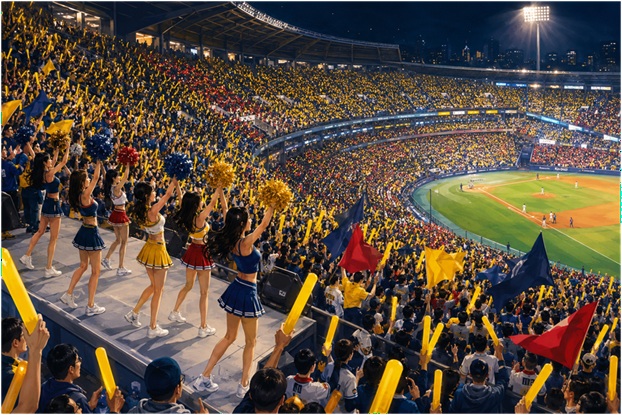
Figure 1. KBO Stadium Cheer Culture — A Festival of Baseball
About This Gallery
When the Korea Baseball Organization (KBO) was founded in 1982, few could have predicted that South Korea would become a global reference point for baseball innovation. Yet over the past four decades, Korea has contributed three distinctive innovations that have reshaped how baseball is experienced, officiated, and structured around the world.
First, Korea transformed the passive act of watching baseball into an active, participatory festival — a cheer culture so immersive that it has drawn attention from ESPN, The New York Times, and MLB executives. Second, Korea became the first top-level professional league to deploy an Automated Ball-Strike System (ABS) — the robot umpire — across a full regular season, resolving one of baseball’s most persistent controversies. Third, Korea built its league from scratch using a corporate-regional model that combined the financial power of major conglomerates with fierce local loyalties, creating a sustainable growth engine that expanded from 6 to 10 teams in just over three decades.
Together, these three innovations demonstrate how a nation with no professional baseball infrastructure in 1980 became a laboratory for the global game — proving that innovation can come from anywhere, and that the future of baseball is being written in languages beyond English.
Innovation 1: From the Stands to the Stage — How Korea Turned Baseball Into a Festival
The KBO Cheer Culture — Redefining Baseball as a Participatory Experience
This table 2 provides key facts about the KBO Cheer Culture, including its origin, key features, global reach, and the scale of fan attendance that has made it a global reference point for fan engagement.
Table 2. KBO Cheer Culture — Key Facts and Current Status
| Detail | Information |
|---|---|
| Origin | Korea Baseball Organization (KBO) |
| Status | Active and expanding — now benchmarked globally, including by MLB |
| Key Feature | Player-specific cheer songs, amplified sound systems, professional cheer squads |
| Global Reach | Covered by ESPN, The Athletic, and New York Times as a model for fan engagement |
| Fan Attendance | Over 8 million per season (pre-pandemic peak) |

Figure 2. Player-Specific Cheer Songs-Every Player has a Theme
Origin Story: From Organically to a Structured System
Korean professional baseball has accomplished something no other league in the world has replicated at scale: it transformed passive game-watching into an active, synchronized communal experience. Every KBO player has a dedicated cheer song. Professional cheer leaders stationed in the stands direct crowds of tens of thousands using microphones and amplifiers. Pom-poms wave in unison. The result is an atmosphere that resembles a K-pop concert far more than a conventional sporting event.
This transformation did not happen overnight. Beginning organically in the 1980s and formalizing through the 1990s and 2000s, KBO cheer culture developed into a structured, reproducible system. Teams employ professional cheer squads who rehearse routines, compose new songs for incoming players, and coordinate with the crowd throughout nine innings.
Impact: Democratizing Baseball Fandom
This table 3 outlines the impact of the KBO Cheer Culture on Korean and global baseball, from expanding the sport’s audience beyond traditional fans to creating new revenue streams and attracting international attention.
Table 3. KBO Cheer Culture — Impact on Baseball
| Impact Area | Description |
|---|---|
| Expanded Audience | KBO cheer culture democratized baseball fandom — fans with no knowledge of the sport are drawn to stadiums purely for the participatory atmosphere, dramatically expanding the sport’s audience beyond traditional fans |
| Global Benchmark | The player-specific cheer song system has been analyzed by MLB executives and international sports marketers as a potential blueprint for revitalizing fan engagement in leagues where attendance has stagnated |
| Revenue Generation | Cheer culture drove secondary revenue streams: team-branded merchandise, social media virality, and content creation by fans turned each stadium visit into a marketing event |
| Global Media Attention | During the 2020 COVID-19 pandemic, when KBO became the first major league to resume play and was broadcast to US audiences via ESPN, millions of American viewers encountered KBO’s cheer culture for the first time — generating widespread fascination and international media coverage |
Distribution: From Korea to the World
This table 4 shows how the KBO Cheer Culture has spread from Korean stadiums to global recognition, with coverage by major international media and interest from MLB executives.
Table 4. KBO Cheer Culture — Distribution
| Region/User | Status |
|---|---|
| KBO Stadiums | Active and expanding across all 10 KBO franchises |
| International Media | Covered by ESPN, The Athletic, and New York Times |
| MLB Teams | MLB executives have traveled to Korea to study the model |
| Global Broadcast | Reached millions of US viewers during 2020 ESPN broadcasts |
| Other Leagues | Being studied as a potential blueprint for revitalizing fan engagement |
Innovation 2: The End of the Disputed Call — Korea’s Robot Umpire Revolution
The Automated Ball-Strike System (ABS) — World’s First Full-Season Deployment in a Top-Level Pro League
This table 5 details the technical specifications and deployment status of the Automated Ball-Strike System (ABS), including its technology, accuracy, and historic status as the world’s first full-season deployment in a top-level professional league.
Table 5. ABS (Automated Ball-Strike System) — Technical Specifications and Deployment Status
| Detail | Information |
|---|---|
| System Name | Automated Ball-Strike System (ABS) |
| Developer | KBO in partnership with TrackMan and domestic technology providers |
| Technology | High-speed 3D ball-flight tracking cameras and radar sensors |
| Accuracy | Sub-centimeter margin of error on every pitch |
| Global First | First top-tier professional league to deploy ABS across a full regular season |
| MLB Status | ABS tested in Triple-A minor leagues only; full MLB rollout not yet confirmed |

Figure 3. ABS System at Home Plate — Sub-Centimeter Precision
Origin Story: A Landmark Moment for Baseball
In a landmark moment for the sport of baseball worldwide, the KBO became the first top-level professional baseball league on earth to officially deploy an Automated Ball-Strike System (ABS) — the robot umpire — across all games of a full regular season. Using a network of high-speed cameras and radar sensors installed throughout all ten KBO stadiums, the system tracks the precise three-dimensional trajectory of every pitch and determines whether it passes through the strike zone with a margin of error of less than one centimeter.
The strike zone is calibrated individually for each batter based on recorded height and typical batting stance data. Decisions are communicated to the home plate umpire in real time via earpiece and displayed on stadium scoreboards. Managers retain a limited number of ABS challenges per game, preserving a human oversight element while eliminating the systematic inconsistency that has long characterized human ball-and-strike calls.
Impact: Resolving Baseball’s Most Persistent Controversy
This table 6 outlines the impact of the ABS system on baseball officiating, from resolving disputed calls to improving game pace and providing data that is now informing MLB’s own rollout planning.
Table 6. ABS — Impact on Global Baseball
| Impact Area | Description |
|---|---|
| First Top-Level Deployment | KBO became the first top-tier professional league to deploy ABS at the highest level of play, doing so while MLB remained in the testing phase in its minor leagues |
| Eliminating Controversy | The system resolved one of baseball’s most persistent and contentious problems — disputed ball-and-strike calls have generated controversy for as long as the sport has existed; ABS eliminates this variable entirely |
| Faster Game Pace | By removing the need for managers to argue pitch calls, ABS has contributed measurably to faster game pace — a priority across professional baseball globally |
| Global Data Resource | The 2024 KBO full-season dataset — covering hundreds of thousands of pitches — is now informing MLB’s own ABS rollout planning |
Distribution: From KBO to the World
This table 7 shows how KBO’s ABS deployment has positioned Korea as a trusted laboratory for officiating technology, with data and insights now being drawn upon by the global baseball community.
Table 7. ABS — Distribution
| User/League | Status |
|---|---|
| KBO (Korea) | Full-season deployment across all 10 stadiums (2024) |
| MLB (United States) | Testing in Triple-A minor leagues; using KBO data for rollout planning |
| NPB (Japan) | Monitoring KBO deployment for potential adoption |
| CPBL (Taiwan) | Studying KBO implementation |
| Global Baseball Community | Using 2024 KBO season data as a resource |
Innovation 3: Building a League from Scratch — The Corporate-Regional Model That Grew Korean Baseball
The KBO Founding Model — Corporate Investment + Regional Identity as a Sustainable Growth Engine
This table 8 provides an overview of the KBO Founding Model, including the league’s founding year, current size, ownership structure, regional anchors, and the scale of annual attendance that this model has enabled.
Table 8. KBO Founding Model — League Structure and Growth Overview
| Detail | Information |
|---|---|
| Founded | 1982 with 6 original, corporate-backed franchises |
| Current Size | 10 franchises across South Korea |
| Ownership Model | Major Korean conglomerates (chaebols) own and operate franchises |
| Regional Anchors | Seoul, Busan, Daegu, Gwangju, Incheon, Suwon, Changwon, and more |
| Annual Attendance | Over 8 million (pre-pandemic peak) |
| Industry Diversification | Ownership expanded from manufacturing to gaming and telecom companies |

Figure 4. KBO Franchise Map — From 6 Teams to 10
Origin Story: An Accelerated Path to Professional Baseball
When Korea’s professional baseball league was established in 1982, the country had almost no existing professional sports infrastructure. Rather than waiting for independent team owners to emerge organically — as had occurred in the United States and Japan over many decades — Korea chose an accelerated path: it invited the nation’s largest conglomerates to each adopt and fund a franchise, anchored in a specific city or region.
The original six teams were backed by Samsung (Daegu), MBC (Seoul), OB (Seoul), Lotte (Busan), Haitai (Gwangju), and Sammi (Incheon). Each team bore the name and identity of its corporate parent alongside a declared geographic home. This dual identity — corporate and civic — proved to be a powerful formula.
“By leveraging chaebol investment, KBO built functional stadiums, professional scouting networks, and national broadcasting agreements within years rather than decades.”
— Lee, M., & Park, Y. (2021)
Impact: A Sustainable Growth Engine
This table 9 outlines the impact of the KBO Founding Model on Korean baseball, from enabling rapid infrastructure buildout to creating fierce local loyalties and providing financial stability through corporate ownership.
Table 9. KBO Founding Model — Impact on Korean Baseball
| Impact Area | Description |
|---|---|
| Rapid Infrastructure | By leveraging chaebol investment, KBO built functional stadiums, professional scouting networks, and national broadcasting agreements within years rather than decades |
| Regional Identity | Regional identity was treated as a strategic asset from the outset, creating fierce local loyalties — Samsung Lions fans in Daegu, Lotte Giants fans in Busan — that remain among the most passionate in Asian baseball |
| Financial Stability | Corporate ownership provided financial stability that insulated teams from revenue volatility, enabling consistent investment in player development, facilities, and long-term fan relationships |
| Adaptability | The original structure was never designed to be static — as the Korean economy evolved, KBO adapted the model to bring in new corporate partners from new industries |
Distribution: From 6 Teams to 10 — A Continuously Growing Model
This table 10 shows the franchise expansion milestones of the KBO from its 6-team founding to its current 10-team structure, demonstrating the model’s adaptability across economic eras.
Table 10. KBO Franchise Expansion Milestones — Growth from 6 to 10 Teams
| Milestone | Teams / Change | Significance |
|---|---|---|
| 6-team founding (1982) | Samsung, MBC, OB, Lotte, Haitai, Sammi | Manufacturing and media conglomerates establish league |
| Expansion to 7 teams | Binggrae Eagles (now Hanwha Eagles) | Food and consumer goods sector enters baseball |
| Expansion to 8 teams | Additional franchise added | Reflects nationwide growth in fan base |
| Contraction to 8 teams | Two franchises merged | Post-financial crisis restructuring; model proved resilient |
| 9th franchise (2013) | NC Dinos (NCSoft, gaming company) | First technology-sector ownership — signals modernization |
| 10th franchise (2015) | KT Wiz (KT Corporation, telecom) | Telecom giant anchors league in Suwon; 10-team era begins |
Korea Baseball Innovation Timeline
This timeline traces the evolution of Korean baseball innovation from the founding of the KBO in 1982 through the formalization of cheer culture, the adoption of the ABS system, and the expansion to a 10-team league, showing how Korea became a global reference point for baseball innovation.
Table 11. Korea Baseball Innovation Timeline
| Year | Milestone |
|---|---|
| 1982 | KBO founded with 6 corporate-backed franchises — Samsung, MBC, OB, Lotte, Haitai, Sammi |
| 1980s-1990s | Cheer culture begins organically in stadiums |
| 1990s-2000s | Cheer culture formalizes — professional cheer squads, player-specific songs, amplified sound systems |
| 2013 | NC Dinos (NCSoft, gaming company) joins as 9th franchise — first technology-sector ownership |
| 2015 | KT Wiz (KT Corporation, telecom) joins as 10th franchise; 10-team era begins |
| 2020 | KBO becomes first major league to resume play during COVID-19; broadcast to US via ESPN |
| 2020s | Global media coverage of KBO cheer culture by ESPN, The Athletic, New York Times |
| 2024 | KBO deploys Automated Ball-Strike System (ABS) across all 10 stadiums — world’s first full-season deployment in a top-level professional league |
Why Korea Leads in These Innovations
Korea’s three pioneering innovations are not isolated achievements — they are interconnected parts of a unique baseball ecosystem that has transformed the country into a global reference point for fan engagement, technology adoption, and league management. The following factors explain why Korea has been able to produce such remarkable innovations.
1. A Passion for Participation
KBO cheer culture is not simply about entertainment — it is about democratizing the fan experience. By making every fan a participant rather than a spectator, KBO has drawn millions of people into stadiums who might otherwise never have attended a baseball game. This participatory approach has expanded the sport’s audience far beyond traditional baseball fans, creating a new model for fan engagement that leagues around the world are now studying.
2. Technological Courage
Korea’s adoption of the Automated Ball-Strike System (ABS) before any other major league demonstrates a willingness to lead that is rare in professional sports. Rather than waiting for MLB to set the pace, KBO took the risk — and the reward — of being first. This bold, data-driven decision-making has positioned KBO as a trusted laboratory for officiating technology, with the 2024 KBO season dataset now informing MLB’s own rollout planning.
3. Corporate-Civic Synergy
The chaebol-regional identity model is a structural innovation that enabled rapid growth. By leveraging corporate investment while anchoring teams in specific cities, KBO created a dual loyalty — to the brand and to the region — that has sustained passionate fan bases for decades. This model proved resilient through economic crises and adaptable across industries, expanding from manufacturing to gaming to telecommunications.
4. A Culture of Continuous Improvement
KBO has never been static. From its 6-team founding to its current 10-team structure, the league has continuously adapted to changing economic conditions and evolving fan expectations. The addition of NC Dinos (gaming) and KT Wiz (telecom) demonstrates how KBO has tracked Korea’s own economic evolution, bringing in new corporate partners from emerging industries.
5. Integration of the Three Innovations
The three innovations are not separate — they are interconnected parts of a single ecosystem. The corporate-regional model provides the financial stability and infrastructure that makes cheer culture and technology adoption possible. Cheer culture creates the passionate fan base that fills stadiums and generates revenue. And technology adoption — like ABS — keeps KBO at the forefront of the global game, attracting international attention and investment.
Why Korea Matters to Global Baseball Innovation
Table 12. Korea’s Core Strengths in Global Baseball Innovation
| Strength | Explanation |
| Fan Culture Leadership | KBO pioneered participatory fandom that has become an international benchmark for audience engagement. |
| Technological Courage | Korea adopted ABS before any other major league, demonstrating bold, data-driven decision-making. |
| Corporate-Civic Model | The chaebol-regional identity framework enabled rapid infrastructure buildout and sustained investment. |
| Global Media Presence | KBO’s 2020 ESPN broadcast demonstrated that Korean baseball can attract an international audience. |
| Player Pipeline | Korean players have succeeded at the MLB level, validating Korea’s domestic player development system. |
This gallery is part of the Baseball Innovation Museum, exploring how nations around the world are shaping the future of baseball through technology and tradition.
References
- Choi, S., & Kim, J. (2023). Fan participation behavior in Korean professional baseball: The role of cheer culture on game attendance. International Journal of Sport Management and Marketing, 23(4), 312–334. https://doi.org/10.1504/IJSMM.2023.000001
- ESPN. (2020, May 5). How KBO baseball became America’s pandemic pastime. ESPN Features. https://www.espn.com/mlb/story/_/id/29101025
- Jung, H. (2022). Technology-driven officiating reform in the Korea Baseball Organization: A policy analysis of the ABS pilot program. Asian Sport Management Review, 15(2), 88–107.
- Korea Baseball Organization. (2024). Official announcement: Full-season deployment of the Automated Ball-Strike System (ABS) for the 2024 KBO regular season. KBO Official Communications. https://www.koreabaseball.com
- Lee, M., & Park, Y. (2021). Corporate franchise ownership and regional identity in South Korean professional sports: The KBO case. Journal of Sport and Social Issues, 45(6), 521–545. https://doi.org/10.1177/0193723521000001
- New York Times. (2024, April 12). In South Korea, baseball is a party. New York Times Sports. https://www.nytimes.com/2024/04/12/sports/baseball/kbo-cheer-culture.html
- Park, C. H., & Yoon, S. (2020). The globalization of KBO baseball: Broadcasting, COVID-19, and the international fan base. Korean Journal of Sport Science, 31(3), 445–460.
- Sports Business Journal. (2015, October 6). KT Wiz joins KBO as 10th franchise: Strategic implications for Asian baseball markets. Sports Business Journal, 18(32), 14–15.
- The Athletic. (2023, September 18). Why MLB executives are flying to South Korea to study fan culture. The Athletic. https://www.theathletic.com/kbo-cheer-culture-mlb
- TrackMan Baseball. (2024). ABS deployment report: KBO 2024 season — Technical overview and accuracy metrics. TrackMan Technical Documentation Series.