
The World‘s First Domestically Designed Pitching Machine That Democratised Baseball Training
This Gallery explores a revolution that transformed both professional training and public entertainment. In 1958, Japan introduced its first domestically designed pitching machine, which not only improved team performance but also sparked the growth of batting centres nationwide, making baseball accessible to everyone.
Table 1. Gallery Overview
| Item | Details |
|---|---|
| Full Title | Japan’s Catapult‑Type Pitching Machine and the Spread of Batting Centres (1958 – Present) |
| Time Span | 1958 – Present |
| Core Impact | Revolutionised baseball training by automating pitching, reducing pitcher injury, and democratising access to batting practice for players and the public alike |
| Key Innovations | 1958 Catapult‑type pitching machine (KS‑P / AR), 1965 First commercial batting centre, 1993 Virtual pitcher simulation, 2020s AI‑powered smart machines (Trajekt Arc, iPitch) |
| Representative Outcomes | Nationwide network of batting centres; NPB and MLB adoption of Japanese‑made machines; designated Mechanical Engineering Heritage No. 109 |
| Uniqueness | The first domestically designed pitching machine in Japan and one of the earliest in the world to throw both fastballs and breaking balls, sparking a nationwide entertainment and training revolution |
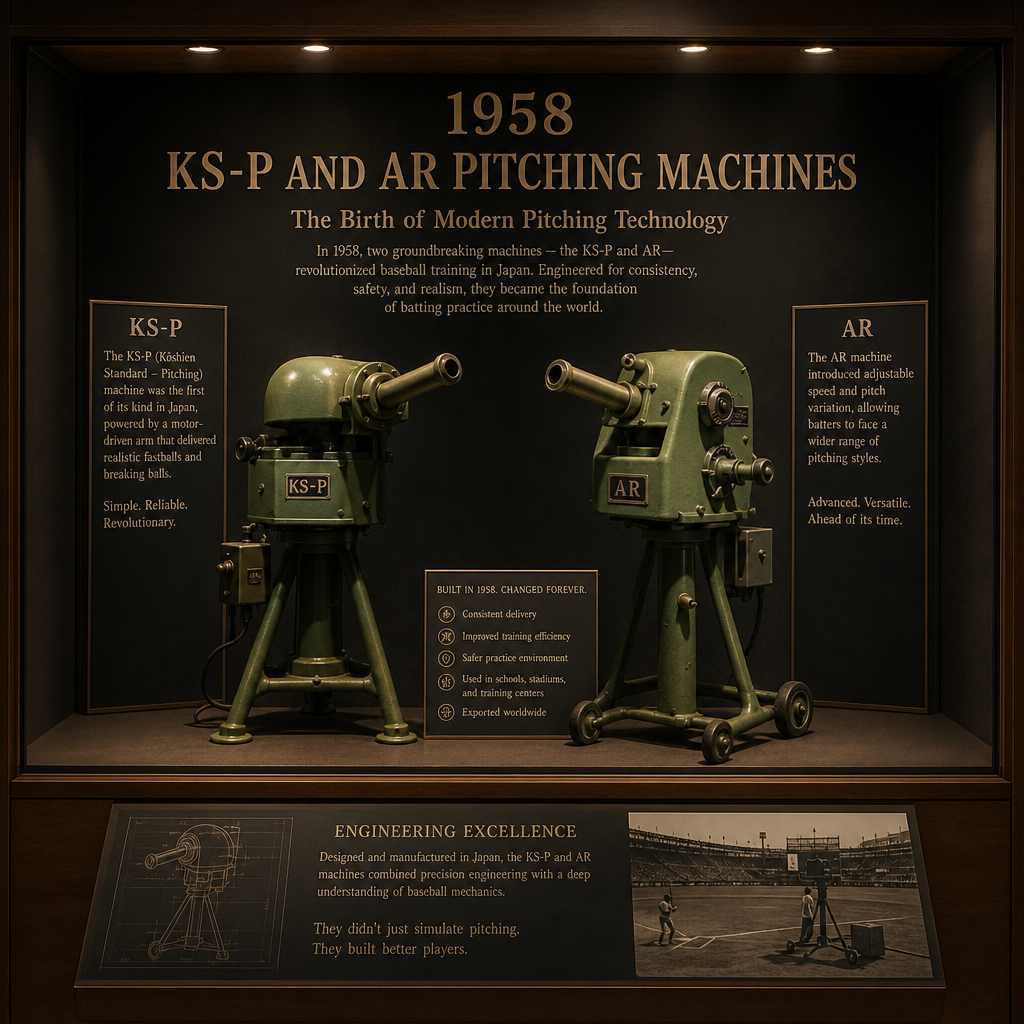
Figure 1. The KS‑P Catapult‑Type Pitching Machine (1958)
About This Gallery
In 1958, a quiet revolution began in Japanese baseball. That year, Hachio Saito, a lecturer at Kanto Gakuin University, designed Japan’s first domestically produced pitching machine — the catapult‑type KS‑P and AR models. This invention did more than automate pitching; it fundamentally transformed how baseball was practised, taught, and enjoyed across an entire nation.
Before the pitching machine, batting practice in Japan relied almost entirely on live pitchers — often the team’s own starting pitchers — throwing batting practice in addition to their regular game duties. This was not only inefficient but also placed a significant physical burden on pitchers, increasing injury risk and reducing the quality of both practice and game performance. The pitching machine changed all of that.
The machine’s impact was immediate and profound. It could throw 12 fast or slow balls per minute — equivalent to the workload of 15 pitchers. This single device freed pitchers from the exhausting duty of throwing batting practice, allowing them to focus on their primary role: winning games.
But the machine‘s legacy extends far beyond professional baseball. It was the catalyst that gave birth to Japan’s nationwide network of batting centres — commercial facilities where anyone, from aspiring young players to office workers seeking entertainment, could experience the thrill of hitting a baseball. Today, batting centres are a beloved part of Japanese popular culture, found in virtually every city and town across the country.
“This machine led to the establishment of batting centers all over the country where people could easily enjoy the thrill of baseball, which also provided a new form of entertainment for the public.”
— Japan Society of Mechanical Engineers, Mechanical Engineering Heritage No. 109
The Invention: How the Catapult‑Type Machine Worked
The catapult‑type pitching machine operated on a compressed‑spring mechanism. A ball was loaded into a housing, and a spring was compressed and then released, propelling the ball forward. A claw mechanism in the housing could apply spin to the ball, enabling it to throw not only fastballs but also breaking balls — a remarkable capability for its time.
Table 2. Technical Specifications of the KS‑P and AR Models
| Specification | Details |
|---|---|
| Inventor | Hachio Saito, Lecturer at Kanto Gakuin University |
| Year of Design | 1958 (Showa 33) |
| Type | Catapult‑type (compressed spring mechanism) |
| Capacity | 12 fast or slow balls per minute |
| Capabilities | Both fastballs and breaking balls |
| KS‑P Manufacturer | Kumagai Gumi Co., Ltd. (now Technos Co., Ltd.) |
| AR Manufacturer | Chunichi Stadium Co., Ltd. (manufacturer: Keihatsu Kogyo Co., Ltd.) |
| Equivalent Workload | 15 pitchers |
| Current Location (KS‑P) | Baseball Hall of Fame Museum, Tokyo |
| Current Location (AR) | Chunichi Batting Center, Gifu |
| Recognition | Mechanical Engineering Heritage No. 109 (2021) |
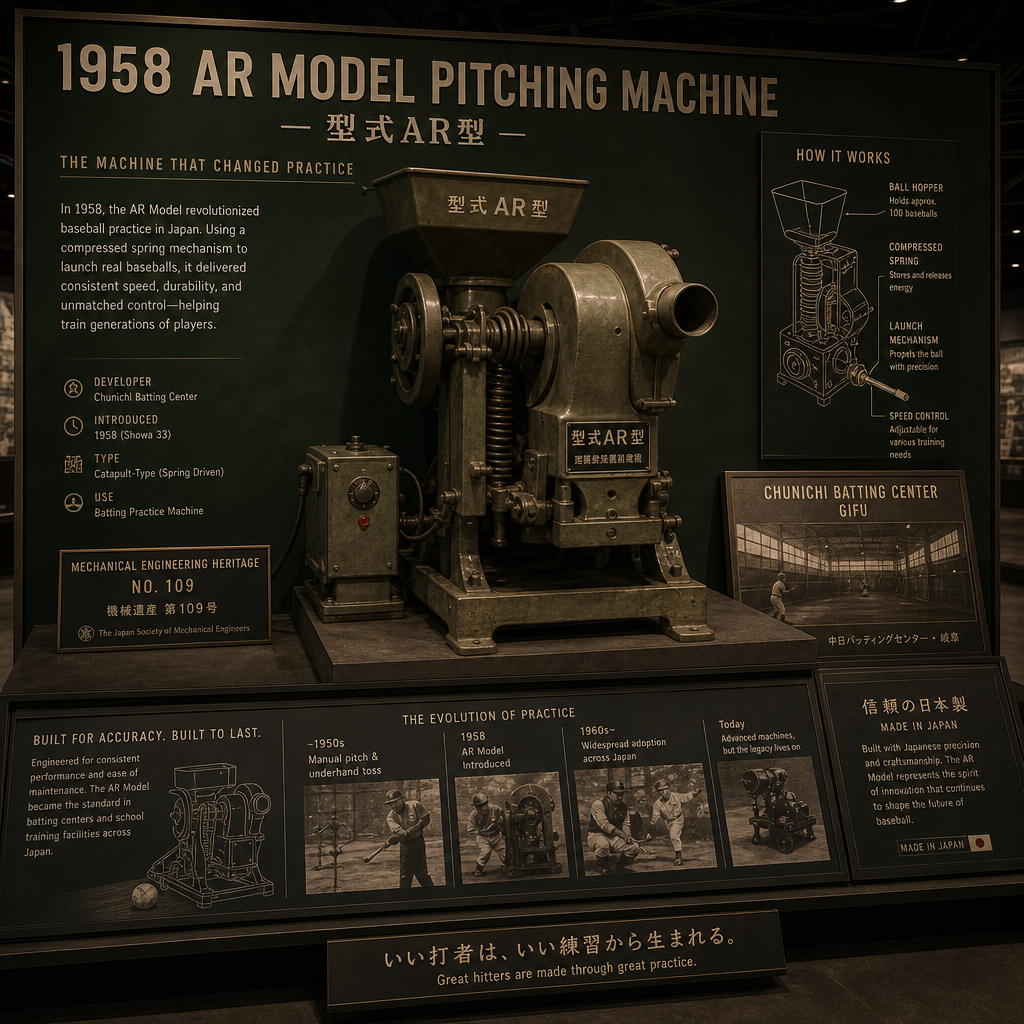
Figure 2. The AR Model at Chunichi Batting Center, Gifu
The Origin Story: A Lecturer’s Vision
The story of Japan‘s first pitching machine begins with Hachio Saito, a lecturer at Kanto Gakuin University. In the 1950s, Japanese baseball was growing rapidly in popularity, but training methods remained primitive. Batters needed live pitching to practice, and that meant pitchers had to throw countless extra pitches — a burden that wore down arms and shortened careers.
Saito, drawing on his engineering knowledge, set out to solve this problem. He designed a machine that could automate the pitching process — delivering ball after ball with consistent speed and spin, without tiring. The result was the catapult‑type pitching machine, which used a compressed spring to propel balls at a rate of 12 per minute.
The KS‑P model was manufactured by Kumagai Gumi Co., Ltd. (now Technos Co., Ltd.) in 1958 and was used by the Chunichi Dragons. The AR model, manufactured by Chunichi Stadium Co., Ltd. (manufacturer: Keihatsu Kogyo Co., Ltd.), was produced around the same time. Both machines served the Chunichi Dragons, helping the team revolutionise its training regimen.
A Note on the “First” Pitching Machine: Some sources note that the Chunichi Dragons had actually been using an imported American pitching machine as early as 1954 — the year the team won its first Japan Series championship. However, the 1958 Saito machine is recognised as the first domestically designed and manufactured pitching machine in Japan. This distinction is important: while the idea of a pitching machine came from abroad, Japan quickly indigenised and improved the technology, making it more accessible, more reliable, and more widely adopted.
The Impact: Freeing Pitchers, Improving Performance
The pitching machine‘s most immediate impact was on pitcher workload and performance. In the 1950s, it was common for starting pitchers to also serve as batting practice pitchers. This double duty exhausted arms and reduced effectiveness in actual games.
The machine changed that. By taking over batting practice duties, it allowed pitchers to conserve their arms for game situations. The results were measurable. According to contemporary reports, when the Chunichi Dragons adopted the pitching machine, the team’s team ERA improved from 3.24 to 2.32 — a dramatic drop. While other factors surely contributed, the reduction in pitcher workload was a significant factor.
Table 3. The Pitching Machine‘s Impact on the Chunichi Dragons (1954)
| Metric | Previous Year | After Machine Introduction | Change |
|---|---|---|---|
| Team ERA | 3.24 | 2.32 | -0.92 |
| Team Batting Average | — | .256 | +5 |
| Team Home Runs | 66 | 70 | +4 |
The Rise of Batting Centres: A Nation Falls in Love with Baseball
Perhaps the pitching machine‘s most enduring legacy is the nationwide proliferation of batting centres — commercial facilities where anyone can pay to hit balls thrown by a pitching machine.
The First Batting Centre: Japan‘s first commercial batting centre opened on December 28, 1965, on the rooftop of the Tokyo Rakutenchi building in Tokyo’s Sumida Ward (near Kinshicho Station). Called the “Rakutenchi Batting Center,” it was an instant success.
The timing was perfect. Japan was in the midst of a baseball boom, fuelled by the heroics of the Yomiuri Giants’ V9 dynasty (1965–1973). The public wanted to emulate their heroes, and batting centres offered a safe, accessible, and affordable way to do so.
The 1970s Boom: By the 1970s, batting centres had exploded in popularity. At their peak, there were over 1,500 batting centres across Japan. They became a staple of Japanese leisure culture — a place where office workers could blow off steam, families could spend time together, and aspiring young players could get extra practice.
A Unique Japanese Phenomenon: While batting centres exist in other countries, Japan‘s version is culturally distinct. In the United States, batting cages are primarily training facilities for serious players. In South Korea, they are more like amusement arcades. Japan combines both elements: batting centres are simultaneously places for serious practice and casual entertainment. This dual nature — what might be called “serious fun” — is uniquely Japanese.
Evolution: From Springs to Screens
The pitching machine did not stand still. Over the decades, Japanese engineers and companies continuously refined and improved the technology.
1993: Virtual Pitcher Simulation
In 1993, a breakthrough occurred: a machine was developed that could project video of a real professional pitcher onto a screen and synchronise the ball release with the pitcher‘s motion. This created the illusion of facing an actual NPB pitcher — a revolutionary training tool that brought the game experience to batting centres.
The Arm‑Type and Rotary‑Type Machines
The catapult‑type machine was only the beginning. It spurred the development of arm‑type machines (which mimic the human throwing motion) and rotary‑type machines (which use spinning wheels to propel balls). Each new generation offered greater accuracy, higher speeds, and more pitch types.
Today‘s Cutting‑Edge: Trajekt Arc and iPitch
Today, Japanese baseball — and increasingly, Major League Baseball — relies on AI‑powered smart machines that can replicate any pitcher‘s arsenal with stunning accuracy.
Table 4. Modern Japanese‑Adopted Smart Pitching Machines
| Machine | Capabilities | Adoption in Japan |
|---|---|---|
| Trajekt Arc | Projects life‑size video of a real pitcher on a screen; replicates pitch type, speed, spin, release point, and movement based on tracking data | SoftBank Hawks (3 machines), Rakuten Eagles, Hanshin Tigers |
| iPitch | Input pitch data (speed, type, spin, location) via tablet; replicates real pitcher‘s delivery | Widely used across NPB |
The Trajekt Arc is particularly remarkable. It uses a 2.4‑metre square screen with a projector displaying a life‑size pitcher. The batter sees the pitcher’s full delivery — windup, release, everything — while the machine‘s three‑wheel launcher fires a ball that matches the pitcher’s actual speed, spin, and movement. The experience is so realistic that it has been described as a “perfect copy” (完コピ) of facing the actual pitcher.
The SoftBank Hawks, one of NPB‘s most technologically advanced teams, now operate three Trajekt Arc machines. The rental cost for a single machine is approximately 100 million yen for three years — a price that NPB teams consider “cheap” given the competitive advantage it provides.
Japan‘s Continuing Leadership in Pitching Machine Technology
Japan’s leadership in pitching machine technology is not just historical — it remains a global benchmark today.
NPB‘s 12 Teams Use Japanese‑Made Machines
According to reports, all 12 NPB teams use pitching machines manufactured in Japan. These machines are renowned for their accuracy and reliability. One Japanese engineer reportedly spent 50 years perfecting his pitching machine designs, achieving a level of precision that has made Japanese machines the gold standard.
MLB Adoption
Japanese‑made pitching machines have also found their way to Major League Baseball. The Trajekt Arc, for example, is used by Shohei Ohtani of the Los Angeles Dodgers. In fact, 20 out of 30 MLB teams (two‑thirds of the league) now use the Trajekt Arc. This represents a remarkable “reverse export” — Japanese baseball technology, born from a 1958 lecturer‘s invention, is now being adopted by the very country that originally inspired the sport.
Table 5. Japan’s Pitching Machine and Batting Centre Innovation Timeline
| Year | Milestone |
|---|---|
| 1954 | Chunichi Dragons begin using an imported American pitching machine |
| 1958 | Hachio Saito designs Japan‘s first domestically produced pitching machine (KS‑P / AR) |
| 1965 | Japan’s first commercial batting centre opens in Tokyo‘s Sumida Ward |
| 1970s | Batting centre boom: over 1,500 centres across Japan |
| 1993 | First machine with virtual pitcher projection developed |
| 2021 | KS‑P and AR models designated Mechanical Engineering Heritage No. 109 |
| 2020s | Trajekt Arc and iPitch AI‑powered machines adopted by NPB teams |
| 2025 | SoftBank Hawks operate 3 Trajekt Arc machines |
Table 6. Why Japan Leads in Pitching Machine Innovation
| Advantage | Explanation |
|---|---|
| First‑Mover Advantage | Japan developed its own pitching machine technology in 1958, giving it decades of engineering experience over most other baseball nations |
| Precision Manufacturing | Japanese engineers are renowned for their attention to detail and accuracy, producing machines with exceptional control and reliability |
| Integration with Data | Modern Japanese machines integrate TrackMan data and other analytics to replicate real pitchers with unprecedented fidelity |
| Batting Centre Culture | Japan‘s unique batting centre culture creates a large domestic market that drives continuous innovation and improvement |
| Reverse Export to MLB | Japanese machines are now used by two‑thirds of MLB teams, demonstrating global recognition of Japanese engineering excellence |
References
- Baseball Hall of Fame Museum. (n.d.). Japanese oldest pitching machines Catapult type: KS‑P/AR (Mechanical Engineering Heritage No. 109). Japan Society of Mechanical Engineers. https://www.jsme.or.jp/kikaiisan/heritage_109_en.html
- Japan Society of Mechanical Engineers. (2021). 日本現存最古のピッチングマシン カタパルト式:型式KS‑P型/型式AR型 (機械遺産 第109号). https://www.jsme.or.jp/kikaiisan/heritage_109_jp.html
- Wikipedia. (2025). バッティングセンター. https://ja.wikipedia.org/wiki/バッティングセンター
- Wikipedia. (2024). ピッチングマシン. https://ja.m.wikipedia.org/wiki/バッティングマシン
- 文春オンライン. (2022, April 5). “日本最古のピッチングマシン”が示す、立浪ドラゴンズ優勝へのヒント. https://bunshun.jp/articles/-/53183
- 日刊スポーツ. (2025, December 29). ソフトバンク 3連覇へ最新兵器”補強”へ「トラジェクトアーク」本拠地に2台目導入. https://www.nikkansports.com
- スポニチ. (2025, December 2). ソフトバンクが来季3台目を“追加補強”へ 最先端打撃マシンをフル活用でV3目指す. https://www.sponichi.co.jp
- 聯合新聞網. (2025, May 30). 日職/兄弟用的Trajekt Arc軟銀也有 3年租金1億日圓喊「便宜」. https://udn.com
- 中日スポーツ. (2026, June 3). 今季最大の補強か…球筋等を“完コピ”する高性能打撃マシン『トラジェクトアーク』バンテリンDに近く導入へ. https://www.chunichi.co.jp
- スポニチ. (2024, August 21). ソフトバンクのファームで行われている“アイピッチ検定”とは? https://www.sponichi.co.jp