
The Revolution That Began Before Sabermetrics Went Global
This gallery explores how Japan developed its own data‑driven baseball revolution, independent of and even predating the global spread of Sabermetrics. In 1995, a small Japanese company called ASOBO‑UZU began analyzing baseball with video and computers — at a time when “data baseball” was still a foreign concept in Japan. From that single spark grew a movement that would eventually see every NPB team employing data analysts, using TrackMan and Rapsodo, and building player evaluation systems that rival the world’s best.
Table 1. Gallery Overview
| Item | Details |
|---|---|
| Full Title | Japan‘s Data Baseball Revolution — From ASOBO‑UZU to Modern Analytics (1995 – Present) |
| Time Span | 1995 – Present |
| Core Impact | Revolutionized Japanese baseball by introducing data‑driven analysis, shifting from intuition‑based to evidence‑based training and strategy |
| Key Innovations | 1995 ASOBO‑UZU founded (video analysis system), 2005 Bobby Valentine’s data‑driven Marines championship, 2014‑present widespread adoption of TrackMan, Rapsodo, and biomechanical analysis |
| Representative Outcomes | Every NPB team now employs data analysts; TrackMan in 10+ NPB stadiums; Rapsodo in 100+ universities and 140+ high schools; SoftBank‘s 16‑level player evaluation system |
| Uniqueness | One of the earliest data baseball companies in the world — at a time when even MLB had not yet embraced analytics — and a rare case of reverse influence from Japan back to the United States |
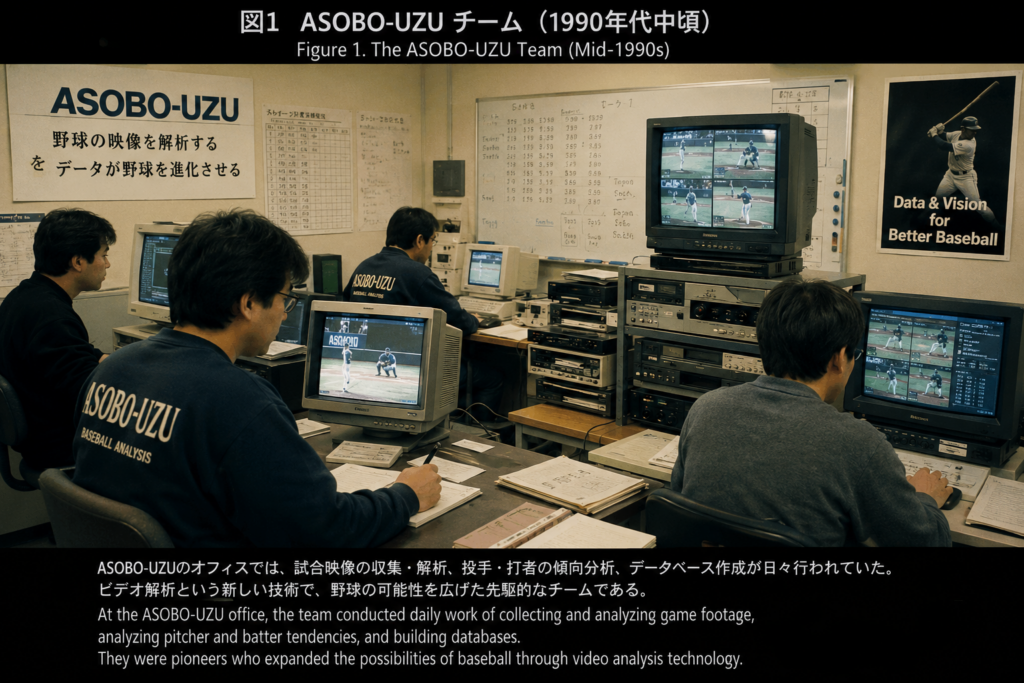
Figure 1. The ASOBO‑UZU Team (Mid‑1990s)
About This Gallery
In 1995, while Major League Baseball was still decades away from the “Moneyball” revolution and Sabermetrics remained a niche academic pursuit, a small company in Japan was already using computers and video to analyze baseball with surgical precision. Its name was ASOBO‑UZU — and it would change Japanese baseball forever.
The story of Japan‘s data baseball revolution is not a simple import of American ideas. It is a story of independent invention — of a man who rebuilt his life from bankruptcy to create a company that considered expanding into Major League Baseball itself. It is a story of an American manager who brought data analysts to Japan and proved that analytics could win championships — a lesson that later flowed back to the United States. And it is a story of how Japan, once a follower in data baseball, has become a leader in integrating biomechanics, tracking technology, and player development into a seamless system that now influences the global game.
“About 30 years ago, there was a data analysis company in Japan that considered expanding into Major League Baseball. Its name was ASOBO‑UZU.”
— Hiroo Hiro, from Data Ball: How Analysts Changed Baseball (2024)
The Pioneers: How Japan‘s Data Revolution Began
ASOBO‑UZU: The Company That Almost Went to MLB
Table 2. ASOBO‑UZU — Japan’s First Data Baseball Company
| Aspect | Details |
|---|---|
| Founder | Katayama Munetomo (片山宗臣, born 1946) |
| Year Founded | 1995 |
| Background | Born into a family of wigmakers for traditional Kabuki theater; went bankrupt after cosigning a friend‘s debt; rebuilt his life through his father’s company and then founded ASOBO‑UZU |
| Origin Story | Inspired by golf — Katayama filmed his own swing with a video camera to improve his score; realized the same approach could revolutionize baseball |
| Key Products | Video analysis system, “Score Maker” scoring software |
| Legacy | Later renamed Data Stadium; laid the foundation for modern baseball analytics in Japan |
The origin of Japan‘s data baseball revolution began not in a baseball stadium, but on a golf course. Katayama Munetomo, a wigmaker’s son who had lost everything after cosigning a friend‘s debt, was an avid golfer struggling to improve his score. He discovered that video analysis of his own swing helped him identify flaws that pure practice could not reveal. From that insight, he realized that the same approach could transform baseball.
In 1995, Katayama founded ASOBO‑UZU — a company dedicated to collecting and analyzing baseball data with computers. At a time when Japanese baseball was still dominated by “spirit theory” (根性論) and intuition, ASOBO‑UZU was doing something radical: using video footage, frame‑by‑frame analysis, and computer databases to understand how pitchers threw and how hitters could defeat them.
The 1995 Japan Series: A Data‑Driven Masterpiece
ASOBO‑UZU‘s breakthrough came almost immediately. In the 1995 Japan Series between the Yakult Swallows and the Orix BlueWave, ASOBO‑UZU provided data analysis that helped Yakult defeat Orix 4 games to 1.
The most stunning achievement: ASOBO‑UZU had “almost perfectly” devised a strategy to neutralize Ichiro Suzuki — who had just won his second consecutive batting title with a .342 average. This was a player widely considered unhittable at the time.
“Before the series, we had almost perfectly devised a strategy to defeat Orix, and especially Ichiro.”
— ASOBO‑UZU, recalling the 1995 Japan Series
The data analysis also supported one of the most legendary moments in Japan Series history: the 14‑pitch duel between Orix‘s Kobayashi and Yakult’s O‘Malley — a battle that became a national memory.
A Company That Considered MLB
ASOBO‑UZU‘s influence was so significant that the company considered expanding into Major League Baseball. This was an astonishing ambition for a Japanese company in the mid‑1990s — at a time when even American teams had not yet embraced data analysis on a large scale.
Today, ASOBO‑UZU lives on as Data Stadium, continuing to provide data analysis services to Japanese baseball and beyond. But its legacy is far greater than any single company: it proved that data could win baseball games — and that Japan could lead in this field, not just follow.
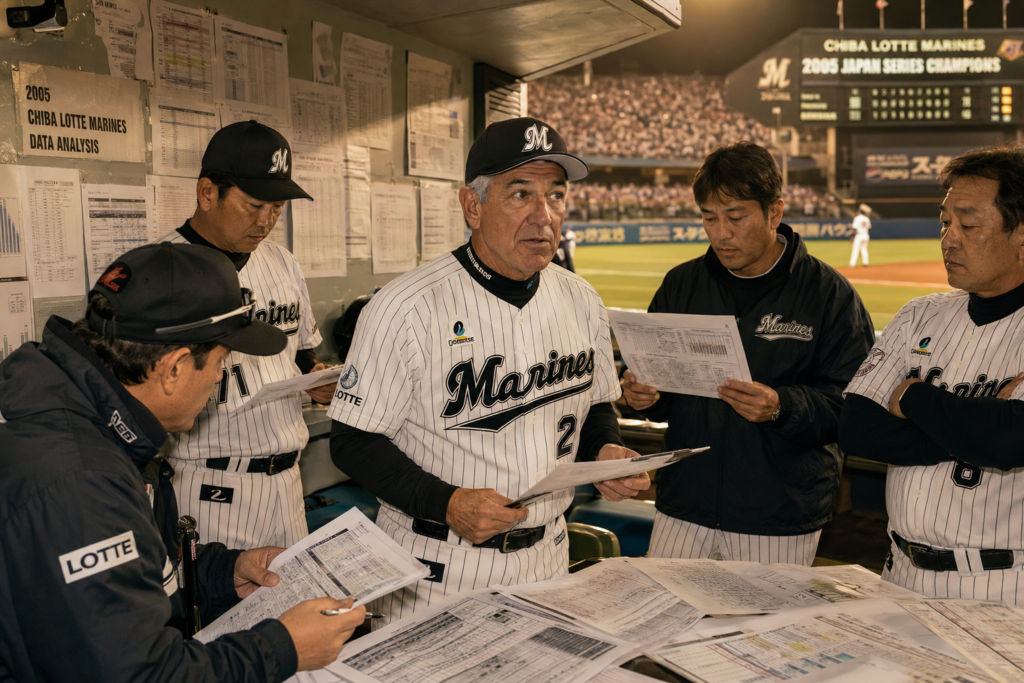
Figure 2. Bobby Valentine and the 2005 Chiba Lotte Marines
The Catalyst: Bobby Valentine and the 2005 Miracle
If ASOBO‑UZU proved that data could work, Bobby Valentine proved that data could win championships.
Table 3. Bobby Valentine‘s Data‑Driven 2005 Season
| Aspect | Details |
|---|---|
| Manager | Bobby Valentine (American, former MLB player and manager) |
| Team | Chiba Lotte Marines |
| Previous Championship | 31 years (1974) |
| 2005 Result | Japan Series champions |
| Key Innovation | Brought data analysts from the United States; used data‑driven lineup construction |
| Unique Statistic | Used 125 different batting orders in 136 games |
| Recognition | Received the Matsutaro Shoriki Award — only the second foreigner to receive this honor (after Sadaharu Oh) |
When Bobby Valentine returned to manage the Chiba Lotte Marines in 2004, he brought with him something that Japanese baseball had rarely seen: data analysts from the United States. Valentine was not just using data — he was building a data‑driven culture from the ground up.
The results were astonishing. In 2005, Valentine led the Marines to their first Japan Series championship in 31 years. Over the 136‑game season, he used 125 different batting orders — a staggering level of variation that was only possible because he had data to support each decision.
Valentine‘s success proved to Japanese baseball what ASOBO‑UZU had only suggested: data‑driven decision‑making works. It was not “cheating” or “un‑Japanese” — it was smart baseball.
“Some people might say it was cowardly… but the data was correct.”
— On the data‑driven strategy against Ichiro
Valentine‘s 2005 championship had a lasting impact. It demonstrated to every NPB team that analytics could provide a competitive advantage — and that the future of baseball would be shaped by data, not just intuition.
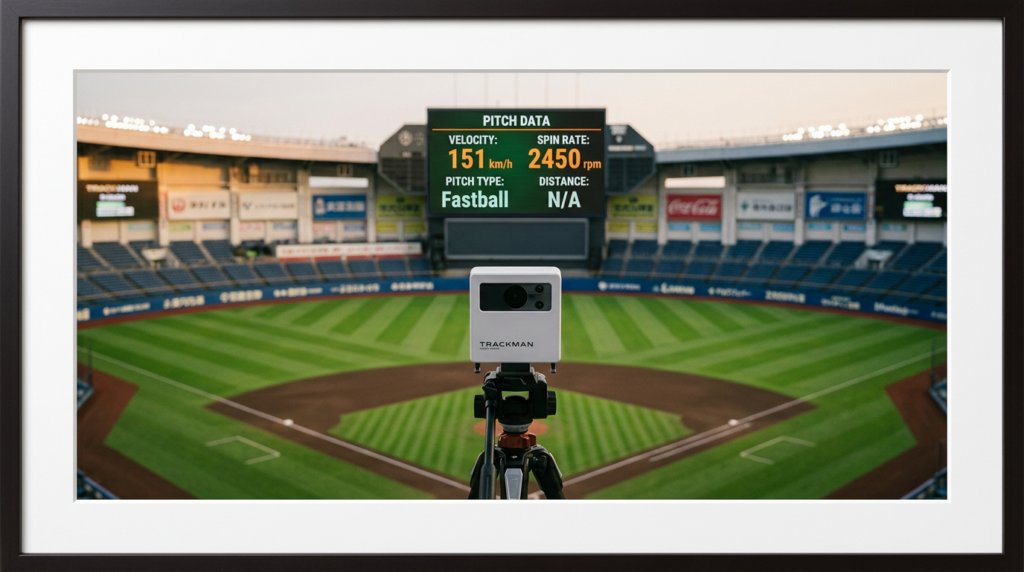
Figure 3. TrackMan and Rapsodo in NPB
The Modern Era: Tracking Technology and the Analytics Revolution
Today, Japan‘s data baseball revolution has reached every corner of the game. From the 12 NPB teams to 100 universities and 140 high schools, data analysis is now an essential part of baseball in Japan.
TrackMan: The Stadium Standard
Table 4. TrackMan in NPB
| Aspect | Details |
|---|---|
| Type | Stadium‑installed ball‑tracking system |
| Technology | Radar‑based tracking of pitch velocity, trajectory, spin rate, break amount |
| NPB Adoption | 10+ NPB teams contracted as of 2023 |
| Model | Rental model — teams pay annual usage fees |
| Challenge | All contracted teams receive the same data — competitive advantage comes from how you analyze it |
TrackMan has become the standard for game‑data collection in NPB. Installed in stadiums across the league, it captures every pitch — speed, trajectory, spin rate, and movement. But as one analyst noted, simply having TrackMan is not enough: “Just installing TrackMan doesn‘t give you an advantage. All contracted teams get the same data. What matters is what analysis you do and what areas you apply it to.”
This recognition has driven NPB teams to hire data analysts and biomechanics experts who can extract actionable insights from the raw data.
Rapsodo: The Portable Revolution
Table 5. Rapsodo in Japan
| Aspect | Details |
|---|---|
| Developer | Rapsodo (founded in Singapore, 2010) |
| Technology | Camera + radar‑based tracking |
| Key Advantage | Portable — can be used in practice, bullpens, and training facilities |
| First Japanese Adopter | Keio University baseball team (2017) |
| Current Adoption | All 12 NPB teams, 100+ universities, 140+ high schools |
| Partnerships | Hokkaido Nippon‑Ham Fighters, Tokyo Yakult Swallows |
While TrackMan is stadium‑based, Rapsodo is portable. This has made it the go‑to tool for practice and player development. A player can use Rapsodo in the bullpen, get instant feedback on a tablet, and make adjustments in real time.
Rapsodo‘s adoption in Japan began not with a professional team, but with Keio University‘s baseball team in 2017. Today, it is used by all 12 NPB teams, over 100 universities, and more than 140 high schools — a testament to how deeply data analysis has penetrated Japanese baseball at every level.
Biomechanics and Player Development
The most advanced Japanese teams have gone beyond simple data collection to integrate biomechanics into player development. Teams like the Yokohama DeNA BayStars employ biomechanics analysts who study the relationship between tracking data and physical movement.
Table 6. Modern Data Integration in NPB
| Team | Innovation |
|---|---|
| SoftBank Hawks | 16‑level multi‑stage player evaluation system combining data and scouting |
| Yokohama DeNA | Biomechanics analyst studying tracking data + body movement relationships |
| Hokkaido Nippon‑Ham Fighters | Data partnership with Rapsodo Japan for player development |
| Tokyo Yakult Swallows | Data partnership with Rapsodo Japan |
The SoftBank Hawks represent the cutting edge of this trend. The team has established a 16‑level player evaluation system that integrates data from multiple sources — TrackMan, Rapsodo, biomechanical analysis, and traditional scouting — to assess players from draft through to the first team.
Japan‘s Data Baseball Innovation Timeline
| Year | Milestone |
|---|---|
| 1995 | Katayama Munetomo founds ASOBO‑UZU |
| 1995 | ASOBO‑UZU helps Yakult Swallows defeat Orix in Japan Series, neutralizing Ichiro |
| 2000 | Katayama publishes PC Will Change Baseball (パソコンが野球を変える!) |
| 2004 | Bobby Valentine returns to manage Chiba Lotte Marines |
| 2005 | Valentine leads Marines to Japan Series championship with data‑driven approach |
| 2010 | Rapsodo founded in Singapore |
| 2014 | Data analytics becomes standard across NPB |
| 2017 | Keio University becomes first Japanese adopter of Rapsodo |
| 2023 | 10+ NPB teams contracted with TrackMan |
| 2024 | Data analytics fully integrated into all 12 NPB teams |
| Present | Rapsodo used in all 12 NPB teams, 100+ universities, 140+ high schools |
Why Japan Leads in Data Baseball Innovation
| Advantage | Explanation |
|---|---|
| Early Independent Invention | Japan developed its own data baseball company (ASOBO‑UZU) in 1995, independent of American Sabermetrics |
| Willingness to Learn from Abroad | Bobby Valentine‘s success showed that importing American analytics could work in Japan — and Japanese teams quickly adopted and improved upon these methods |
| Comprehensive Adoption | From all 12 NPB teams to 100+ universities to 140+ high schools, data analysis has penetrated every level of Japanese baseball |
| Integration of Biomechanics | Japanese teams like DeNA and SoftBank have gone beyond simple statistics to integrate biomechanical analysis with tracking data |
| Data as a Player Asset | Independent leagues like the BC League now use TrackMan and Rapsodo data as “assets” to help players move to NPB and overseas |
The Big Picture: From ASOBO‑UZU to the World
Japan‘s data baseball journey is a remarkable story of independent innovation, cross‑cultural learning, and continuous evolution.
It began with ASOBO‑UZU — a small company founded by a man who had lost everything, using video cameras and computers to analyze baseball in ways that even American teams had not yet imagined. It was accelerated by Bobby Valentine, who brought American data analysts to Japan and proved that analytics could win championships. And it has matured into a comprehensive system where every NPB team uses TrackMan and Rapsodo, where universities and high schools teach data‑driven baseball, and where biomechanics analysts study the relationship between data and the human body.
Today, Japan is no longer a follower in data baseball — it is a leader. The very tools that Japanese teams now use are being adopted by teams around the world. The data‑driven culture that began with a single company in 1995 has become the new standard for baseball everywhere.
References
- Diamond Online. (2024, October 27). イチローを丸裸にした恐るべき攻略法「卑怯だと言う人もいるかもしれないが…」. https://diamond.jp/articles/-/352131
- FNN Prime Online. (2024, September 6). 野球のデータ革命は軍用技術から生まれた?プロが使用する「トラックマン」と慶大野球部も使う「ラプソード」の誕生背景と強み. https://www.fnn.jp
- GAORA. (2026, March 27). 「測定から育成へ」240名規模のデータ測定会を開催. https://www.gaora.co.jp
- JBpress. (2026, January 27). 「アナリストは研究職ではない」金沢慧氏が指摘する「データ野球」のリアルと四国アイランドリーグplusでの実証実験. https://jbpress.ismedia.jp
- Takai Laboratory, Tokyo University of Science. (n.d.). パソコンが野球を変える! (Book review). http://web.tku.ac.jp
- Wikipedia. (n.d.). 巴比·瓦伦泰 (Bobby Valentine). https://zh.wikipedia.org