
Before 1970, the Dominican Republic had sent only 18 players to the major leagues. Today, that number has grown to over 2,300 — a transformation that would not have been possible without one visionary man. This gallery tells the story of Epifanio “Epy” Guerrero, who in 1973 opened the world’s first baseball academy and, in doing so, created a model that would revolutionize how baseball talent is discovered, developed, and delivered to the world.
This table 1 provides a comprehensive overview of the Epy Guerrero Academy Model, the world’s first baseball academy, including its founding, facilities, key milestones, and global impact.
Table 1. Gallery Overview
| Item | Details |
|---|---|
| Gallery Full Title | Epy Guerrero Academy Model — The World’s First Baseball Academy (1973 – Present) |
| Time Span | 1973 – Present |
| Founder | Epifanio “Epy” Guerrero (January 3, 1942 – May 23, 2013) |
| First Academy Location | Yamasá, Dominican Republic (1973) |
| Second Academy Location | Villa Mella, Dominican Republic (1977) |
| Core Innovation | Created the first formal baseball training academy in the world — a residential facility combining housing, meals, baseball training, and life skills education |
| Key Milestones | 1973 (first academy in Yamasá), 1977 (Villa Mella academy), 1981 (Toronto Blue Jays adoption), 1987 (first team-owned academy, Dodgers), Today (all 30 teams have academies) |
| Representative Outcomes | Over 2,300 Dominican players now in professional baseball organizations; 54 players signed by Guerrero reached the major leagues |
| Uniqueness | The first baseball academy in the world — a grassroots innovation that created the template for all modern player development systems in the Dominican Republic and beyond |
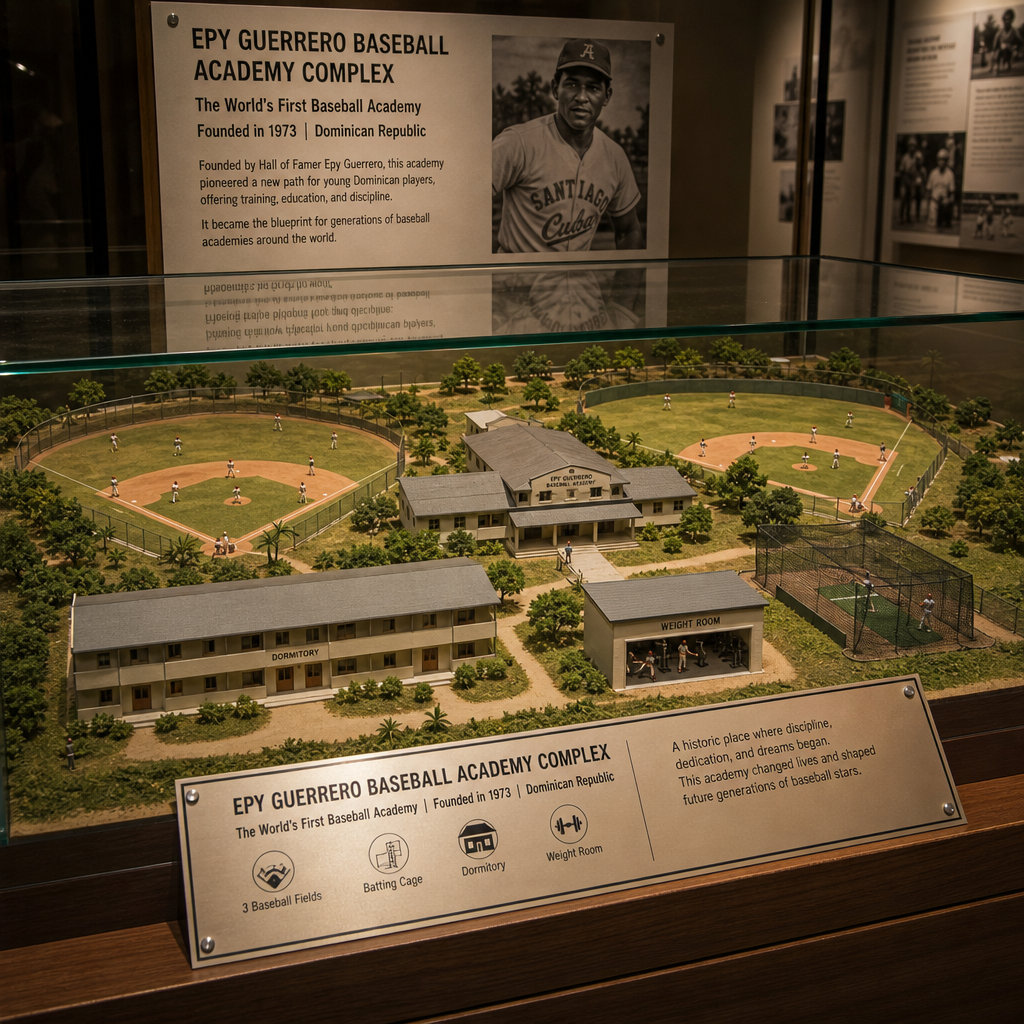
Figure 1. The Epy Guerrero Baseball Academy Complex — The World‘s First Baseball Academy (Diorama)
About This Gallery
The story of the modern baseball academy begins with one man’s dream. Epy Guerrero, a native of Santo Domingo, played briefly in the minor leagues in 1961 and 1962. When his playing career didn‘t take off, he found another path to the majors: scouting. In 1965, he was hired as a part-time scout by Pat Gillick for the Houston Astros. His first major signing came in 1967 when he inked César Cedeño — a player who debuted in the majors at age 19 and hit .320 with 22 homers and 55 steals two years later. At that time, the Dominican had sent only 18 players to the majors.
But Guerrero‘s true genius was yet to come. In 1973, he opened the Epy Guerrero Complex — the country’s first baseball academy. Built on 18 acres with three baseball fields along with a batting cage, dormitory, weight room, and a house where his wife served three meals a day, the complex was part dream come true and part savvy business move. Young prospects — some as young as 13 — refined their raw athletic ability into baseball prowess under Guerrero‘s guidance.
“All my life, I have had it in my mind to have my own ballpark.”
— Epy Guerrero
Today, all 30 North American professional baseball teams have active academies in the Dominican Republic — a direct legacy of Guerrero‘s pioneering vision.
Innovation: Epy Guerrero Academy Model — The World’s First Baseball Academy
This table 2 details the pioneering vision of Epy Guerrero, who established the concept of modern baseball academies in 1973, creating a model that would be adopted by all 30 North American professional baseball teams and transform the Dominican Republic into the world‘s leading source of baseball talent.
Table 2. Epy Guerrero Academy Model — The World’s First Baseball Academy
| Aspect | Details |
|---|---|
| Founder | Epifanio “Epy” Guerrero — former minor league player, legendary scout |
| Year Founded | 1973 — the first baseball academy in the Dominican Republic |
| First Location | Yamasá, Dominican Republic |
| Second Location | Villa Mella, Dominican Republic (1977, about nine miles from Santo Domingo) |
| Facilities | 18 acres with three baseball fields, batting cage, dormitory, and weight room |
| Services | Housing, three meals a day (cooked by his wife Doña Rosario), baseball training, and guidance on becoming switch-hitters and infielders |
| Education | English instruction was part of the package to better prepare players if they signed a contract to come to the United States |
| Key Signings | César Cedeño (1967), George Bell, Tony Fernández, Carlos Delgado |
| Recognition | Considered the “father of Dominican baseball academies” ; credited with signing 54 players who reached the majors, more than any other scout |
| Legacy | Today, all 30 North American professional baseball teams have active academies in the Dominican Republic; the country has become the world‘s leading source of baseball talent |
Origin Story: A Visionary’s Dream
The story of the modern baseball academy begins with Epy Guerrero — a man who could “see the future major leaguer in a young ballplayer the way the visionary poet claimed to see a world in a grain of sand”.
Guerrero was a native of Santo Domingo who played briefly in the minor leagues in 1961 and 1962. When his playing career didn‘t take off, he found another path to the bigs: scouting. In 1965, he was hired as a part-time scout by Pat Gillick for the Houston Astros. His first major signing came in 1967 when he inked César Cedeño — a player who debuted in the majors at age 19 and hit .320 with 22 homers and 55 steals two years later. At the time Cedeño was signed, “the Dominican had sent only 18 players to the majors”.
But Guerrero‘s true genius was yet to come. In 1973, he opened the Epy Guerrero Complex — the country’s first baseball academy. Built on 18 acres with three baseball fields along with a batting cage, dormitory, weight room, and a house where Doña Rosario, Guerrero‘s wife, served three meals a day, the complex was part dream come true and part savvy business move.
“All my life, I have had it in my mind to have my own ballpark.”
— Epy Guerrero
Young prospects — some as young as 13 — refined their raw athletic ability into baseball prowess under Guerrero‘s guidance. Guerrero often recommended that players become infielders and switch hitters because of their smaller physiques. The academy was not just about baseball — it was about preparing young Dominicans for the demands of life in the United States.
In 1977, Guerrero borrowed money and established a more formal academy in Villa Mella, about nine miles from Santo Domingo. Its purpose was to bring in young players, house them, feed them, teach them baseball skills, and provide English instruction to better prepare them if they signed a contract to come to the United States. In 1981, the Toronto Blue Jays began to use the complex. This was a pioneering idea that many other organizations soon adopted.
Impact: Opening the Pipeline to the Majors
This table 3 outlines the transformative effects of Guerrero‘s academy model on Dominican baseball, from creating the template for all academies to dramatically increasing Dominican representation in the major leagues.
Table 3. Epy Guerrero Academy Model — Impact on Dominican Baseball
| Impact Area | Description |
|---|---|
| The Academy Model | Guerrero created the template that all 30 North American professional baseball teams would eventually follow — a model that combines housing, feeding, and training young prospects in a structured environment |
| Dramatic Growth | Before Guerrero‘s academy, the Dominican had sent only 18 players to the majors. A recent estimate put over 2,300 players from the Dominican in professional baseball organizations |
| Adoption by North American Teams | Today, all 30 teams in the major American professional baseball leagues have active academies in the Dominican Republic |
| Investment | Over $200 million has been invested in Dominican baseball academies |
| Global Recognition | Guerrero is considered the “real and only father of Baseball Academies” in the Dominican Republic |
| Player Development | The academy model provided young Dominican prospects with the training, nutrition, and structure needed to compete at the highest level |
Distribution: From One Man‘s Dream to a National Industry
This table 4 shows how Guerrero’s academy model spread from his independent facility in Yamasá and Villa Mella to become the standard for all 30 North American professional baseball teams operating in the Dominican Republic today.
Table 4. Epy Guerrero Academy Model — Distribution
| User/Team | Status |
|---|---|
| Epy Guerrero Complex (1973) | The first academy — independent, operated by Guerrero himself |
| Villa Mella Academy (1977) | Second academy, built with borrowed money |
| Toronto Blue Jays | First team to use Guerrero‘s academy (1981); later adopted it as their own |
| Los Angeles Dodgers | Opened the first team-owned academy in 1987 (“Academia Las Palmas” in Guerra) |
| All 30 Teams | Today, every team operates an academy in the Dominican Republic |
| Total Investment | Over $200 million invested in Dominican baseball academies |
Dominican Republic Academy Innovation Timeline
This timeline traces the evolution of Dominican baseball academy innovation from the opening of the first academy in 1973 through the widespread adoption by all 30 North American teams.
Table 5. Dominican Republic Academy Innovation Timeline
| Year | Milestone |
|---|---|
| 1965 | Epy Guerrero hired as a part-time scout by the Houston Astros |
| 1967 | Guerrero signs César Cedeño — his first major signing |
| 1973 | Epy Guerrero opens the first baseball academy in the Dominican Republic — the Epy Guerrero Complex in Yamasá |
| 1977 | Guerrero establishes a second academy in Villa Mella |
| 1981 | Toronto Blue Jays adopt Guerrero‘s academy |
| 1987 | Los Angeles Dodgers open the first team-owned academy (“Academia Las Palmas” in Guerra) |
| 2008 | Guerrero inducted into the Dominican Sports Hall of Fame |
| 2013 | Epy Guerrero passes away at age 71 |
| Today | All 30 teams operate academies in the Dominican Republic |
Why the Dominican Republic Leads in This Innovation
The Epy Guerrero Academy Model is not merely a technical achievement — it is a testament to how vision, necessity, and persistence can overcome resource scarcity. The following factors explain why the Dominican Republic was able to produce such a remarkable grassroots innovation.
1. Necessity as the Mother of Invention
The Dominican Republic is a small nation with limited resources. Before 1970, it had sent only 18 players to the majors. The country lacked the infrastructure, funding, and institutional support that existed in the United States. But it had an abundance of raw talent — and a desperate need to find a path out of poverty. This combination of talent and necessity created the conditions for innovation. Epy Guerrero didn‘t have a budget from a team to build an academy — he built one with his own money and vision.
2. The Power of One Visionary
Epy Guerrero’s story is a reminder that one person can change an entire industry. Before Guerrero, there was no such thing as a baseball academy in the Dominican Republic. The concept didn‘t exist. Guerrero didn’t just build a facility — he invented a new model for developing talent. He showed that by housing, feeding, and training young prospects in a structured environment, you could transform raw athletic ability into major league talent. Today, all 30 teams operate academies in the Dominican Republic — a direct legacy of Guerrero‘s vision.
3. A Holistic Approach to Player Development
Guerrero‘s academy was not just about baseball — it was about preparing young Dominicans for the demands of life in the United States. He provided housing, three meals a day, and even English instruction to better prepare players if they signed a contract to come to the United States. This holistic approach — combining baseball training with life skills — was a revolutionary concept that many other organizations soon adopted.
4. Strategic Adaptation to Player Physiques
Guerrero understood that Dominican players were often smaller than their North American counterparts. He adapted his training accordingly, often recommending that players become infielders and switch hitters because of their smaller physiques. This strategic adaptation — recognizing the unique strengths of Dominican players and training them to maximize those strengths — was a key factor in the success of his academy.
5. Building on Local Knowledge and Networks
Guerrero built on techniques employed on the island throughout its long baseball history and utilized his local contacts to build a successful career. He formalized practices that Dominican scouts had used to prepare signees for decades. This integration of local knowledge with formal training was a key innovation that made his academy model uniquely effective.
6. Institutional Adoption and Scaling
What began as one man‘s independent academy was eventually adopted by the Toronto Blue Jays in 1981. This institutional adoption was crucial to scaling the model. Once a team demonstrated the value of the academy approach, other organizations soon followed. Today, all 30 teams operate academies in the Dominican Republic. The transition from individual innovation to institutional adoption is a hallmark of successful grassroots innovation.
This Gallery is part of the Baseball Innovation Museum, exploring how nations around the world are shaping the future of baseball through technology and tradition.
References
- Diario Libre. (2023, May 11). Epy Guerrero el padre de las Academias de Béisbol en República Dominicana. https://www.diariolibre.com
- Georgetown University Repository. (n.d.). Foundation of the first baseball academy in the Dominican Republic: the Epy Guerrero Complex. https://repository.digital.georgetown.edu
- SABR. (2012, January 4). Epifanio Guerrero. Society for American Baseball Research. https://sabr.org
- SI.com. (2013, May 24). Epy Guerrero, scout who helped open Dominican pipeline to majors, dies at 71. https://www.si.com
- Wikipedia. (n.d.). Epy Guerrero. https://en.wikipedia.org