A Player’s Frustration Becomes a Craftsman’s Legacy
In the mid-1980s, Francisco Javier Carbonell was a baseball coach in Santa Clara, Cuba, struggling with a problem that had plagued Cuban baseball for decades: there were never enough training balls. Imported balls were expensive — costing between five and seven dollars each — and they wore out quickly, sometimes lasting only a week of high-intensity practice. So Carbonell decided to make his own. What began as a simple solution to a local shortage has grown into a three-decade legacy of handcrafted rubber training balls that now serve most Cuban provinces, save the country thousands of dollars in foreign currency, and have been used by players ranging from Cuban national team stars to Chicago White Sox slugger José Dariel Abreu. This exhibit tells the story of how one man’s persistence and ingenuity transformed a coaching crisis into a national innovation.
This table 1 provides a comprehensive overview of Cuba’s multi-purpose rubber training ball innovation, including its scope, key milestones, and the unique grassroots nature of this Cuban invention.
Table 1. Exhibit Overview
| Item | Details |
|---|---|
| Full Title | Cuba’s Multi-Purpose Rubber Training Ball Innovation — Francisco Javier Carbonell’s Three-Decade Craftsmanship (Mid-1980s – Present) |
| Time Span | Mid-1980s – Present |
| Core Impact | Created Cuba’s first domestically produced, multi-purpose rubber training balls — durable, affordable, and versatile tools that have reduced dependence on expensive imported training equipment |
| Key Milestones | Mid-1980s (idea born in Santa Clara), 2018 (Inder Annual Science Award — Best Innovator), 2019 (Most Economic Impact Award), 2020 (hundreds of balls produced for the 60th National Baseball Series) |
| Representative Outcomes | Used by most Cuban provinces; adopted by the Cuban National Team; endorsed by renowned coaches including Pedro Pérez; used by Chicago White Sox slugger José Dariel Abreu |
| Uniqueness | A player-turned-craftsman innovation — born from the frustration of a coach who lacked training balls and took matters into his own hands, creating a solution that has lasted over 30 years |
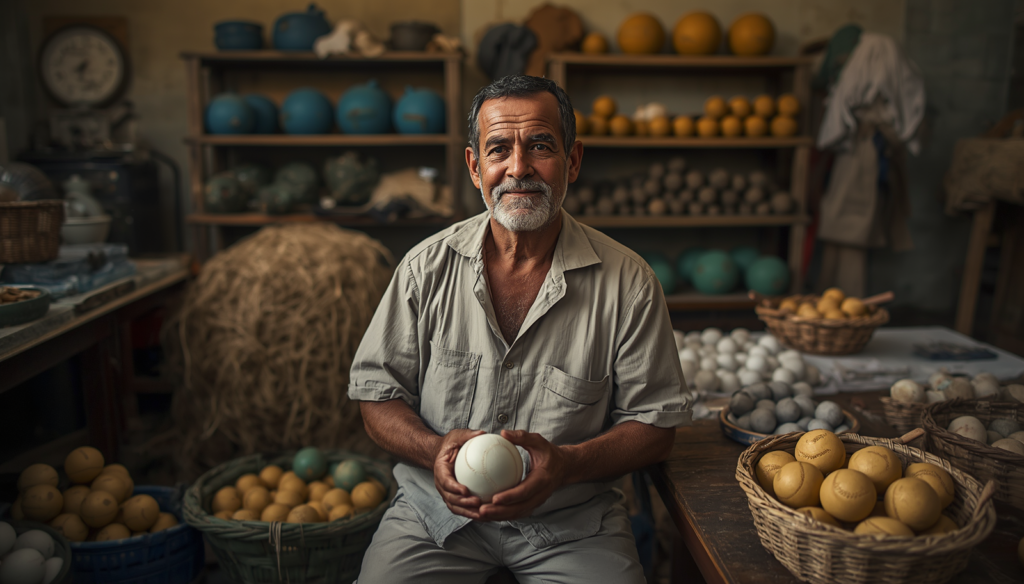
Figure 1. Francisco Javier Carbonell in His Workshop with Multi-Purpose Rubber Training Balls
About This Exhibit
Francisco Javier Carbonell’s story begins not in a laboratory or a factory, but on a baseball field — and in frustration. A former third baseman for Villa Clara’s baseball and softball teams, Carbonell had represented Cuba in international competitions. But in the mid-1980s, he found himself in a new role: coach at a sports facility in Santa Clara, with a critical shortage of training balls.
“I was a coach in a sports area in Santa Clara in the mid-1980s and I didn’t have enough balls for practice. So it occurred to me that I could make them out of rubber with an iron mold.”
— Francisco Javier Carbonell
That simple idea — born from necessity and a willingness to experiment — set Carbonell on a path that would span more than three decades. He sought support from local artisans, including a shoemaker who helped him refine the production process. Together, they created a prototype: a rubber ball that could withstand prolonged use, even in wet conditions.
Today, Carbonell’s balls are used in most Cuban provinces. They come in different sizes, weights, and colors — each designed for a specific training purpose. They last for years, not weeks. And they cost a fraction of what imported balls cost. What began as one coach’s struggle to find enough balls for his team has become a national innovation that has saved Cuba thousands of dollars in foreign currency and improved the training of countless players.
Innovation: Multi-Purpose Rubber Training Balls — A Craftsman’s Three-Decade Legacy
This table 2 details the technical aspects of Carbonell’s invention, including the variety of materials he uses, the different types of balls he produces, and the distinctive features that make his innovation unique.
Table 2. Multi-Purpose Rubber Training Balls — Technical Specifications
| Aspect | Details |
|---|---|
| Developer | Francisco Javier Carbonell Duménigo — former Cuban baseball and softball national team player, turned coach and craftsman |
| R&D Duration | Over 30 years of continuous development and refinement |
| Materials | Rubber, polyurethane, and PVC — each selected for specific training purposes |
| Production Method | Handcrafted using a thermal machine that processes different types of raw rubber; balls are made in iron molds |
| Ball Types | Rubber balls: Solid construction with cork or steel shot inserted inside depending on the intended application; PVC balls: Hollow inside, designed for use in pitching machines |
| Weight Range | From 4 to 12 ounces for baseball; up to 21 ounces for softball |
| Color Coding | Various colors — each color corresponding to a different training purpose |
| Lifespan | 3 to 5 years of high-intensity use — significantly longer than imported synthetic balls (about one week) or leather balls (up to three months) |
| Production Capacity | Approximately 100 balls per day by a single artisan |
| Cost | 60 Cuban pesos (CUP) per ball — a fraction of the $5–$7 cost of imported training balls |
| Awards | Inder Annual Science Award “José Yáñez Ordaz” — Best Innovator (2018); Most Economic Impact Award (2019); recognition at the 8th International AFIDE Congress |
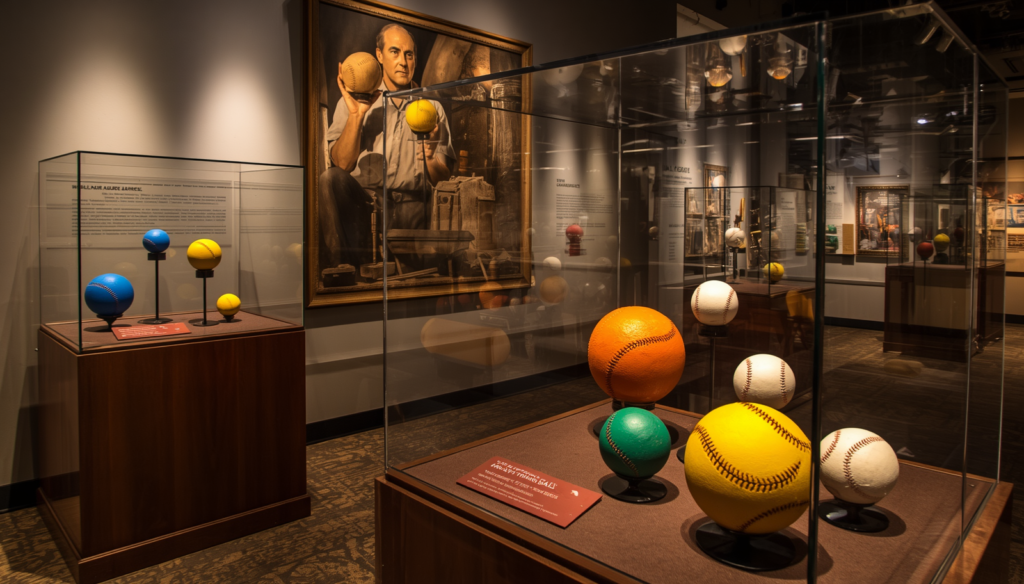
Figure 2. Variety of Multi-Purpose Rubber Training Balls
Origin Story: A Coach’s Frustration Becomes a Craftsman’s Mission
Carbonell’s journey began in the mid-1980s, when he was a coach in Santa Clara. The shortage of training balls was acute. Imported balls were expensive — Cuba was spending between five and seven dollars per ball — and they wore out quickly. Synthetic balls sometimes lasted only a week of high-intensity training; leather balls might survive three months at most.
“I didn’t have enough balls for practice. So it occurred to me that I could make them out of rubber with an iron mold.”
— Francisco Javier Carbonell
Carbonell didn’t just have an idea — he acted on it. He approached local artisans, including a shoemaker in Villa Clara, and convinced them to join his project. Together, they developed a prototype: a rubber ball that could withstand prolonged use and even perform in wet conditions. The balls were made by pouring rubber into iron molds and curing them.
The early results were promising. Carbonell registered his invention with the National Association of Innovators and Rationalizers (ANIR). He wrote a book, En Busca de las 100 millas (In Search of 100 Miles), documenting his methodology.
But the real validation came from the coaches and players who used his balls. Pedro Pérez — who spent more than 20 years as the pitching coach for the Cuban national team — became one of Carbonell’s most enthusiastic advocates. Pérez used the rubber balls with pitchers in Villa Clara, with the national team, and even during his coaching stints in Mexico.
“Almost all the coaches who have used them have praised them. From Pedro Pérez, who was the national team’s pitching coach for more than 20 years, to Julio Romero.”
— Francisco Javier Carbonell
Carbonell’s innovation also attracted international attention. José Dariel Abreu, the Cuban slugger who went on to star for the Chicago White Sox, trained with 100 of Carbonell’s balls.
“José Dariel Abreu, of the Chicago White Sox, trained with 100 balls, had good results, and ordered more to use in his training plan.”
— Francisco Javier Carbonell
Impact: Saving Money, Improving Training
This table 3 outlines the transformative effects of Carbonell’s invention on Cuban baseball, from reducing the nation’s reliance on expensive imported equipment to providing durable, versatile training tools for players at all levels.
Table 3. Multi-Purpose Rubber Training Balls — Impact on Cuban Baseball
| Impact Area | Description |
|---|---|
| Cost Reduction | Each imported training ball costs $5–$7; Carbonell’s balls cost 60 Cuban pesos (approximately $2–$3) — a fraction of the price |
| Foreign Currency Savings | By replacing imported balls with domestically produced ones, Carbonell’s innovation saves Cuba thousands of dollars annually in foreign currency |
| Durability | Each ball lasts 3 to 5 years of high-intensity use — compared to one week for synthetic balls and up to three months for leather balls |
| Versatility | Balls are available in different weights (4 to 12 ounces), sizes, and materials — each designed for a specific training purpose: pitching, hitting, fielding, rehabilitation, and more |
| Pitching Machine Compatibility | PVC balls are hollow inside and designed specifically for use in pitching machines |
| Rehabilitation | Rubber balls are used for rehabilitating upper extremity muscles and shoulder injuries |
| Skill Development | Different weights help develop pitching velocity, batting strength, control, curve rotation, and wrist preparation for sliders |
| National Recognition | Carbonell received the Inder Annual Science Award “José Yáñez Ordaz” for Best Innovator (2018) and the Most Economic Impact Award (2019) |
Distribution: From Santa Clara to the Nation
This table 4 shows how Carbonell’s balls spread from his workshop in Santa Clara to most Cuban provinces, the Cuban National Team, and even international users, demonstrating the national and global reach of this grassroots innovation.
Table 4. Multi-Purpose Rubber Training Balls — Distribution
| User/Team | Status |
|---|---|
| Cuban Provinces | Used by most Cuban provinces for pitcher and player training; purchased by Villa Clara, Guantánamo, Holguín, Ciego de Ávila, Cienfuegos, Sancti Spíritus, and Matanzas |
| National Baseball Series | Hundreds of balls produced for the 60th National Baseball Series |
| Cuban National Team | Adopted for use by the national team |
| Youth Categories | Used across all age categories |
| Latin America | Baseball coaches in several Latin American countries have used the balls in their methodological work |
| International Players | José Dariel Abreu (Chicago White Sox) trained with 100 balls and ordered more |
| Disabled Athletes | Carbonell has developed variants for blind and visually impaired athletes |
Cuba’s Multi-Purpose Rubber Training Ball Innovation Timeline
This timeline traces the evolution of Carbonell’s innovation from its genesis in the mid-1980s through three decades of refinement, national recognition, and widespread adoption across Cuban baseball.
Table 5. Cuba Multi-Purpose Rubber Training Ball Innovation Timeline
| Year | Milestone |
|---|---|
| Mid-1980s | Carbonell, coaching in Santa Clara, creates the first rubber training balls using iron molds |
| 1980s–1990s | Pedro Pérez uses Carbonell’s balls with Villa Clara pitchers and the Cuban national team |
| 2017 | Carbonell presents his innovation at the 7th AFIDE International Convention |
| 2018 | Carbonell wins the Inder Annual Science Award “José Yáñez Ordaz” for Best Innovator |
| 2019 | Carbonell wins the Most Economic Impact Award |
| 2020 | Hundreds of balls produced for the 60th National Baseball Series |
Why Cuba Leads in This Innovation
Cuba’s multi-purpose rubber training ball innovation is a testament to how necessity, creativity, and craftsmanship can overcome resource scarcity. The following factors explain why Cuba has been able to produce such a remarkable grassroots innovation.
1. The “Necessity as Mother of Invention” Principle
Carbonell’s innovation was born from a simple, practical problem: he didn’t have enough balls to train his players. This is the essence of grassroots innovation — not a quest for profit or fame, but a desperate need to solve an immediate problem. In Cuba, where imported equipment is expensive and often scarce, this kind of necessity-driven innovation is not just common — it is essential. Carbonell’s story is a powerful reminder that constraints can be catalysts for creativity.
2. The Import Substitution Imperative
Cuba’s economic context — characterized by limited foreign currency — has created a powerful incentive for import substitution. Each imported training ball costs the country between $5 and $7. Carbonell’s balls cost just 60 Cuban pesos (approximately $2–$3). By replacing imported balls with domestically produced ones, Carbonell’s innovation saves Cuba thousands of dollars annually. This is not just a technical achievement — it is an economic necessity.
3. Extraordinary Durability
The durability of Carbonell’s balls is perhaps their most remarkable feature. Imported synthetic balls last about one week of high-intensity training; leather balls may last three months at most. Carbonell’s rubber balls last three to five years. Some balls made in the 1980s and 1990s are still in use. This extraordinary longevity — up to 10, 15, or even more years — represents a staggering reduction in training costs.
4. Versatility Through Variety
Carbonell doesn’t make just one type of ball — he makes dozens of varieties, each designed for a specific training purpose. His balls come in different:
- Materials: Rubber (solid, with cork or steel shot inside), polyurethane, and PVC (hollow, for pitching machines)
- Weights: From 4 to 12 ounces for baseball; up to 21 ounces for softball
- Colors: Each color corresponds to a different training application
- Sizes: Different sizes for different age groups and training goals
This variety allows coaches to design targeted training programs — using heavier balls to build strength, lighter balls to improve speed, and PVC balls for machine practice.
5. Player-Centered Design
Carbonell is not an engineer or a scientist — he is a former player and coach. This means his balls are designed by someone who understands the game from the inside. He knows what pitchers need, what hitters need, and what coaches need. His balls are not abstract products — they are practical tools born from decades of hands-on experience.
6. Endorsement by Baseball Authorities
Carbonell’s innovation has been validated by some of Cuba’s most respected baseball figures. Pedro Pérez — the legendary pitching coach who spent more than 20 years with the Cuban national team — was an early and enthusiastic supporter. This endorsement from the highest levels of Cuban baseball was crucial to the widespread adoption of Carbonell’s balls.
7. National Recognition and Awards
Carbonell’s work has been recognized with multiple national awards, including the Inder Annual Science Award “José Yáñez Ordaz” for Best Innovator (2018) and the Most Economic Impact Award (2019). These awards — from Cuba’s highest sports authorities — validate the importance of his innovation and encourage its wider adoption.
8. A Model for Other Sports and Industries
Carbonell’s innovation has implications beyond baseball. His success in creating a durable, locally produced alternative to an imported product offers a model for other Cuban sports and industries facing similar challenges. The same principles — using locally available materials, experimenting persistently, and customizing products to meet specific needs — could be applied to other sports equipment, tools, and consumer goods.
This exhibit is part of the Baseball Innovation Museum, exploring how nations around the world are shaping the future of baseball through technology and tradition.
References
- Cuba manufactures multipurpose baseball balls. (n.d.). Cuba Si. https://cubasi.cu
- Carbonell, el hombre de las pelotas. (2018, December 27). JIT. https://www.jit.cu
- Carbonell: el hombre de las pelotas de goma. (2017, November 23). Juventud Rebelde. https://juventudrebelde.cu
- Francisco Javier Carbonell: un innovador en el deporte. (n.d.). Vanguardia. https://vanguardia.cu
- Garantizan producción de pelotas para la Serie Nacional de Béisbol. (2020, July 10). Radio Reloj. https://www.radioreloj.cu
- ¿Por qué no se generaliza el uso de las pelotas de goma? (2019, March 5). Granma. https://www.granma.cu