A Craftsman’s Import Substitution Revolution
In a modest carpentry workshop on the outskirts of Pinar del Río, a self-taught craftsman named Claudio Roba spent six years perfecting a baseball bat that would defy the odds. The result was Cuba‘s first domestically produced wood-fiber bat — a virtually unbreakable training tool that has saved the country thousands of dollars in imports and been wielded by some of Cuba’s greatest baseball stars. This exhibit tells the story of how one man‘s persistence and ingenuity created a homegrown solution to a national problem.
This table 1 provides a comprehensive overview of Cuba’s wood-fiber bat innovation, including its scope, key milestones, and the unique grassroots nature of this Cuban invention.
Table 1. Exhibit Overview
| Item | Details |
|---|---|
| Full Title | Cuba‘s Wood-Fiber Bat Innovation — Claudio Roba’s Import Substitution Revolution (2008 – Present) |
| Time Span | 2008 – Present |
| Core Impact | Created Cuba‘s first domestically produced wood-fiber baseball bat, virtually unbreakable and designed for training; reduced dependence on expensive imported bats |
| Key Milestones | 2008 (project began), 2014 (full-scale production), 2007 (National Commission certification), 2017 (two brands — Roba and Diosflex — launched) |
| Representative Outcomes | 800 bats produced for the 2008 National Series; used by stars including Alfredo Despaigne, Yoenis Céspedes, and Osmani Urrutia |
| Uniqueness | The first wood-fiber bat manufactured in Cuba — a grassroots innovation born from necessity and craftsmanship, not from a laboratory or corporation |
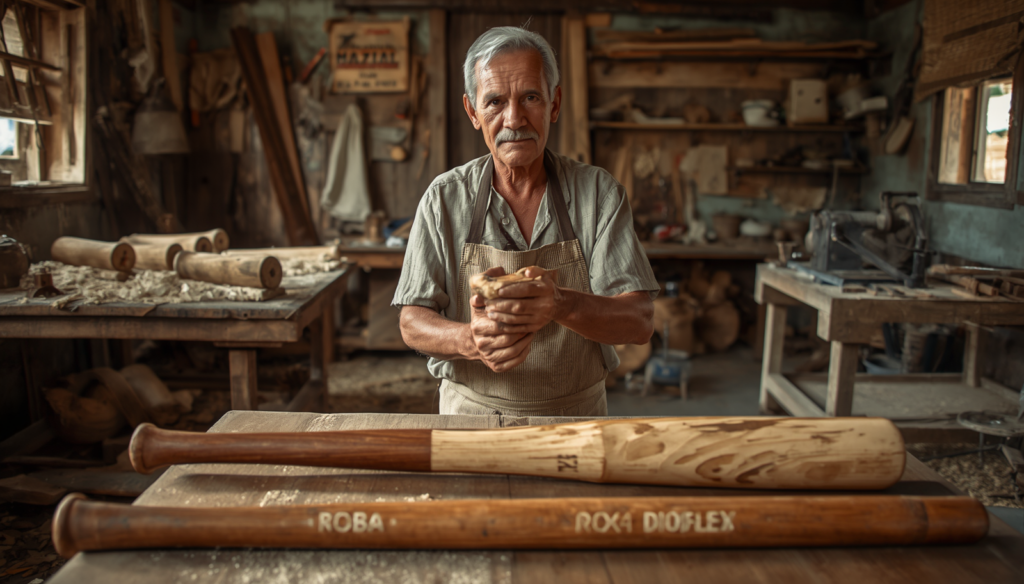
Figure 1. Claudio Roba in His Workshop with Wood-Fiber Bats
About This Exhibit
Claudio Roba‘s story is one of quiet determination. A self-taught carpenter from Pinar del Río — Cuba’s westernmost province — Roba had no formal engineering training. But he had a vision: to create a baseball bat that could rival imported models, using only materials available in Cuba.
For six years, Roba experimented. He tried different woods, different adhesives, different curing processes. His workshop — a modest space filled with wood shavings and hand tools — became his laboratory. His goal was not just to create a bat, but to create a bat that could replace imports.
The breakthrough came when he began extracting fine wood fibers and combining them with a resin-based adhesive. The mixture was molded under pressure, then “cooked” at over 100 degrees Celsius — a process that fused the fibers into a dense, resilient material. Finally, the rough form was shaped on a lathe, yielding a bat that was both light and durable .
“In 2008, I managed to make 800 bats for the National Series. Many were custom-made — adapted to each player’s size, weight, and hands. This should be the norm — creating bats based on the player’s physical and mechanical characteristics, not making the player uncomfortable in the batter‘s box.”
— Claudio Roba
The Roba and Diosflex brands were born. The difference between the two? Flexibility — the Diosflex is slightly more flexible, an indispensable quality that prevents the wood-fiber material from breaking .
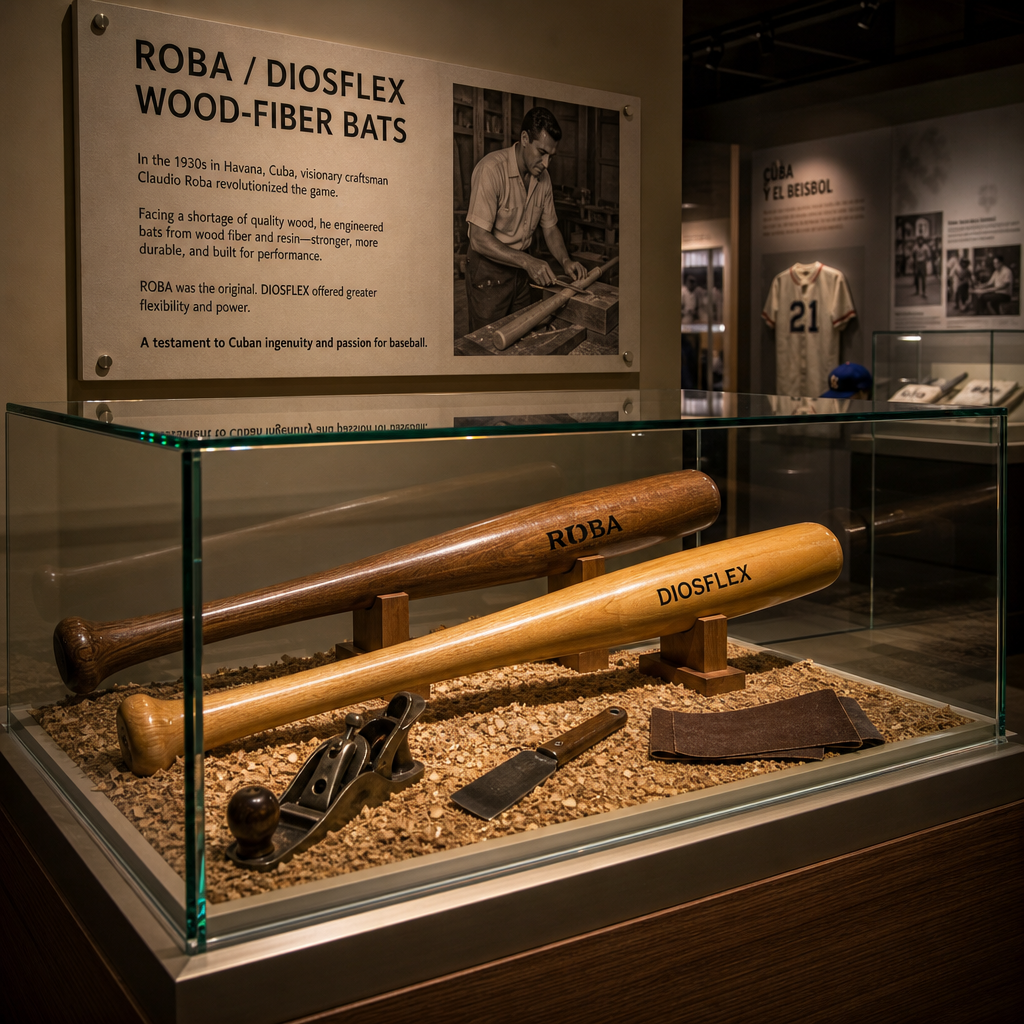
Figure 2. Finished Roba and Diosflex Bats
Innovation: Roba / Diosflex Wood-Fiber Bats — A Craftsman’s Import Substitution Revolution
This table 2 details the technical aspects of Roba’s invention, including the six-year research process, the unique production method using scrap materials, and the distinctive features of the two brands he created.
Table 2. Roba / Diosflex Wood-Fiber Bats — Technical Specifications
| Aspect | Details |
|---|---|
| Developer | Claudio Roba — self-taught craftsman from Pinar del Río |
| R&D Duration | Six years of research and experimentation |
| Production Start | Late 2014, after completing six years of testing and study |
| Production Process | Extracting fine wood fibers, combining with a resin-based adhesive made by Roba himself, molding under pressure, “cooking” at over 100°C, then shaping on a lathe |
| Material Efficiency | Uses scrap materials from other processes — not dependent on large volumes of precious hardwoods |
| Two Brands | Roba (slightly less flexible) and Diosflex (higher flexibility to prevent breakage) |
| Customization | Bats can be shaped based on player‘s size, weight, and hands; fibers can be combined — hard fibers for sluggers (marabú, eucalyptus, oak), flexible fibers for contact hitters (acacia, majagua, güira) |
| Durability | Virtually unbreakable — survives repeated strikes from a five-pound hammer without breaking |
| Certification | Certified by Cuba’s National Baseball Commission since 2007 |
Origin Story: Six Years of a Craftsman‘s Dedication
Claudio Roba’s journey began in 2008, when he started working on a project that would consume the next six years of his life. His inspiration came from observing that many international leagues used carbon-fiber or bamboo bats in practice due to their durability .
“There are leagues around the world that use fiber bats in practice, given their durability, so I took on making a Cuban version.”
— Claudio Roba
His first attempts used bamboo, but the results were not good. He then switched to wood, correcting deficiencies one by one. The process required immense patience — early versions broke relatively easily. But Roba persisted .
The secret to his success lies in the treatment of the fibers, their positioning, and the technique for gluing them. The fibers are arranged in a specific orientation — similar to the blades of a fan — which gives the bat its unique properties. This technique also allows him to incorporate new tree species like marabú, eucalyptus, and acacia, reducing dependence on traditional hardwoods that have become scarce .
The result is a bat that, when hit with a five-pound hammer, dents but does not break .
Impact: Solving the Import Problem
This table 3 outlines the transformative effects of Roba’s invention on Cuban baseball, from reducing the nation’s reliance on expensive imported equipment to providing customized, durable bats for players at all levels.
Table 3. Roba/Diosflex Bats — Impact on Cuban Baseball
| Impact Area | Description |
|---|---|
| Import Substitution | Before Roba‘s bats, Cuba relied heavily on imported bats — a significant expense for a country with limited foreign currency |
| Cost Reduction | The preference to spend thousands of dollars abroad buying bats is replaced by a locally made, affordable alternative |
| Customization | Players can train and compete with bats tailored to their specific physique and swing mechanics |
| Durability | Wood-fiber bats do not break or crack like traditional wooden bats — reducing replacement costs and player frustration |
| Training Efficiency | In practice, players take dozens or even hundreds of swings — a durable bat is essential for effective training |
| National Pride | Cuban players no longer have to rely on foreign-made equipment to compete at the highest level |
Distribution: From Pinar del Río to the Nation
This table 4 shows how Roba’s bats spread from his small workshop in Pinar del Río to the Cuban National Team, the National Baseball Series, and some of Cuba‘s greatest baseball stars, demonstrating the national reach of this grassroots innovation.
Table 4. Roba/Diosflex Bats — Distribution
| User/Team | Status |
|---|---|
| Cuban National Team | Ten bats used in training for the 2007 Pan American Games in Río de Janeiro |
| National Baseball Series | Over 800 bats produced for the 2008 season; continues to supply the league |
| Under-18 Category | Tested at Pinar del Río’s Sports School — teachers agreed they were very appropriate for training because they don’t break or split |
| Provincial Teams | First adopted by Pinar del Río‘s provincial team in the 45th National Series; other provinces soon followed |
| Star Players | Alfredo Despaigne (Cuba’s all-time home run leader), Yoenis Céspedes, Osmani Urrutia, Yosvany Peraza, William Saavedra, and Yoandri Urgellés have all used Roba/Diosflex bats |
| Endorsements | Praised by renowned figures like Luis Giraldo Casanova and Rey Vicente Anglada |
Cuba‘s Wood-Fiber Bat Innovation Timeline
This timeline traces the evolution of Roba’s innovation from its earliest certification in 2007 through the six-year research period, full-scale production, and the official launch of the Roba and Diosflex brands in 2017.
Table 5. Cuba Wood-Fiber Bat Innovation Timeline
| Year | Milestone |
|---|---|
| 2007 | Roba’s wooden bats certified by Cuba‘s National Baseball Commission |
| 2007 | Ten Roba bats used in training for the Pan American Games in Río de Janeiro |
| 2008 | Claudio Roba begins the wood-fiber bat project |
| 2008 | 800 bats produced for the National Baseball Series |
| 2014 | Full-scale production begins after six years of research |
| 2017 | Roba and Diosflex brands officially launched |
| 2017 | Roba continues developing a bat that sends the ball backwards to train catchers |
Why Cuba Leads in This Innovation
Cuba’s wood-fiber bat innovation is not merely a technical achievement — it is a testament to how necessity, creativity, and craftsmanship can overcome resource scarcity. The following factors explain why Cuba has been able to produce such a remarkable grassroots innovation.
1. The “Grassroots Innovation” Spirit
Unlike most baseball innovations that emerge from corporate R&D laboratories or university engineering departments, Claudio Roba‘s wood-fiber bat was born in a modest carpentry workshop in Pinar del Río . Roba is a self-taught craftsman — a “Licenciado en Cultura Física” (Physical Culture graduate) and a specialist in the art of working with wood, but not a formally trained engineer . This bottom-up model of innovation — where a single individual, driven by passion and necessity, creates a solution to a national problem — is unique to Cuba. It demonstrates that world-class innovation does not require expensive laboratories or corporate funding; it requires vision, persistence, and the willingness to experiment .
2. The Import Substitution Imperative
Cuba‘s economic context — characterized by limited foreign currency and restricted access to international markets — has created a powerful incentive for import substitution . Before Roba’s invention, Cuban baseball relied heavily on imported bats, a significant and ongoing expense . By creating a domestically produced alternative, Roba addressed a critical national need: reducing the country‘s dependence on foreign-made equipment. This imperative — to replace imported goods with locally made solutions — is a driving force behind many of Cuba’s most innovative grassroots inventions. Roba‘s bat is not just a product; it is a statement of economic resilience and national self-sufficiency .
3. Material Efficiency and Sustainability
Roba’s production process is remarkably efficient and sustainable. His technique uses scrap materials from other woodworking activities, reducing waste and minimizing the need for large volumes of precious hardwoods . Furthermore, his method allows him to incorporate wood from tree species that were previously considered unsuitable for bat-making — such as marabú, eucalyptus, and acacia — alongside more flexible fibers from majagua and güira . This approach not only reduces costs but also lessens the environmental impact of bat production, making it a model of sustainable innovation in a resource-constrained environment.
4. Customization and Player-Centric Design
Roba’s bats are not mass-produced; they are custom-made for each player . He shapes each bat based on the player‘s size, weight, and hand dimensions — a level of personalization that is rare in mass-produced equipment . Players can also choose the fiber composition: harder fibers (marabú, eucalyptus, oak) for power hitters seeking maximum bat speed, or more flexible fibers (acacia, majagua, güira) for contact hitters prioritizing bat control . This player-centric approach — treating each bat as a unique tool rather than a generic product — reflects the deep understanding Roba has of baseball and the needs of its players .
5. The Power of Craftsmanship Heritage
Claudio Roba’s success is a testament to the power of craftsmanship — the knowledge and skill passed down through hands-on practice rather than formal education . He is a “street craftsman” who learned by doing, experimenting, and persisting through failure . In a world increasingly dominated by automation and mass production, Roba‘s story is a reminder that human ingenuity and manual skill remain powerful forces for innovation. His ability to create a bat that can withstand a five‑pound hammer strike — without breaking — is a direct result of his deep understanding of materials and his refusal to give up .
6. National Recognition and Institutional Support
Roba’s innovation has received recognition from Cuba‘s highest baseball authorities. His bats were certified by the National Baseball Commission as early as 2007, and they have been used by the Cuban National Team, the National Baseball Series, and some of Cuba’s most celebrated players . This institutional endorsement — from the very organizations that govern Cuban baseball — has been crucial to the widespread adoption of Roba‘s bats . It demonstrates that grassroots innovation, when validated by national institutions, can achieve scale and impact far beyond the individual inventor‘s workshop.
7. A Model for Other Sports and Industries
Roba’s innovation has implications beyond baseball. His success in creating a durable, locally produced alternative to an imported product offers a model for other Cuban industries facing similar challenges . The same principles — using locally available materials, experimenting persistently, and customizing products to meet specific needs — could be applied to other sports equipment, tools, and consumer goods. In this sense, Roba‘s bat is not just a baseball innovation; it is a blueprint for grassroots economic development in resource-constrained environments.
References
- Granma. (2017, May 16). The homerun man. https://en.granma.cu
- Granma. (2017, May 11). El hombre que fabrica jonrones. https://www.granma.cu
- BeisbolEnCuba.com. (2015, May 16). Los bates irrompibles de Claudio Roba. https://www.beisbolencuba.com
- OnCubaNews. (2015, May 14). Los bates irrompibles de Claudio Roba. https://oncubanews.com
- PelotaCubanaUSA. (2018, September 13). Bates de cuentapropista podrían usarse en Serie Nacional. https://pelotacubanausa.com