From Havana’s Streets to the World Stage — Creativity Unleashed Under Resource Constraints
Cuba, a nation that has nurtured world-class baseball talent despite limited resources. From the “four corners” street game of Havana evolving into an Olympic sport, to a craftsman spending six years creating wood-fiber bats that rival imported ones, to an innovator spending three decades handcrafting rubber training balls used nationwide — Cuba’s innovation story is a legend of wisdom, resilience, and creativity.
Table 1. Gallery Overview
| Item | Details |
|---|---|
| Gallery Full Title | Cuba Baseball Innovation Gallery — From Streets to the World (2017 – Present) |
| Time Span | 2017 – Present |
| Core Impact | Under resource-constrained conditions, through creative engineering, local material substitution, and modernization of traditional games, Cuba has contributed a unique innovation paradigm to global baseball |
| Three Core Innovations | Baseball5 (From Streets to Olympics), Roba/Diosflex Wood-Fiber Bats (Import Substitution), Multi-Purpose Rubber Training Balls (Nationwide Training Tool) |
| Uniqueness | A one-of-a-kind “grassroots innovation” model in global baseball — not dependent on high-tech investment, but rather on wisdom, craftsmanship, and passion for baseball to create world-class solutions in resource-scarce conditions |
About This Gallery
Cuba’s baseball innovation story is fundamentally different from that of Japan, Taiwan, or the United States. There are no massive R&D budgets here, no cutting-edge laboratories, no semiconductor industry support — but Cuba has one resource that no other country can replicate: creativity.
Under resource-constrained conditions, Cuba’s coaches, engineers, and craftsmen solve practical problems in the most humble ways. A self-taught carpenter spent six years developing wood-fiber bats that could replace imported ones. A former national team player spent thirty years handcrafting rubber training balls, now used in most Cuban provinces. A children’s street game from Havana’s alleys was refined into an official Olympic sport within just a few years.
These innovations share a common theme: using wisdom to compensate for resource scarcity. They prove that baseball innovation doesn’t always require massive investment — sometimes, a craftsman’s hands, a coach’s vision, or a street’s inspiration are enough to change the face of a nation’s baseball.
Innovation 1: Baseball5 — From Havana’s Streets to the Olympic Stage
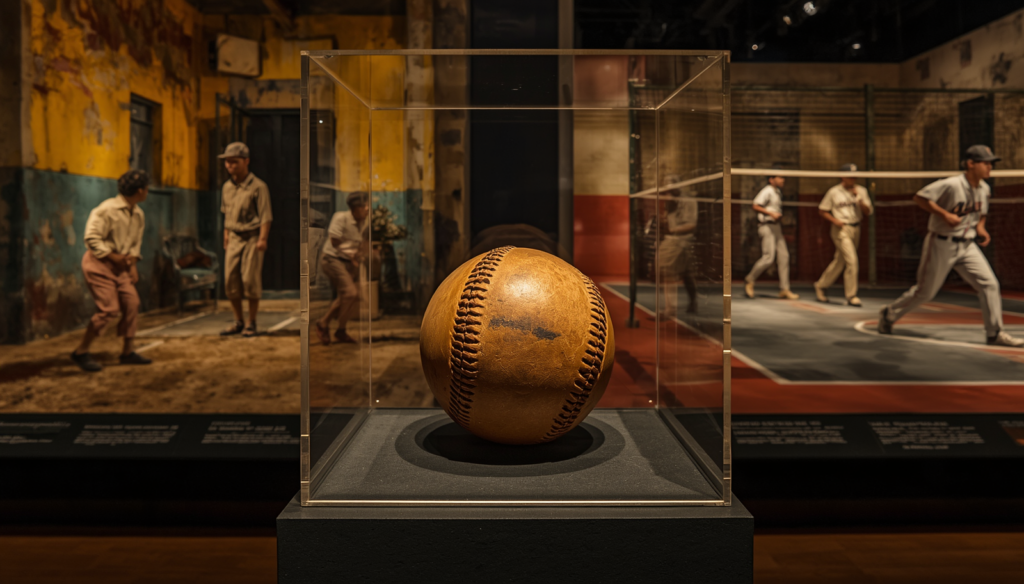
Figure 1. Baseball5 — From Havana’s Streets to the Olympic Stage
Table 2. Baseball5 — From Havana Streets to Olympic Sport
| Aspect | Details |
|---|---|
| Inspiration | Cuba’s generations-old street game “cuatro esquinas” (four corners) |
| Proponents | WBSC President Riccardo Fraccari, promoted by Cuban baseball expert Reynaldo Batista Fernandez |
| Year of Birth | 2017 |
| Core Philosophy | “We wanted baseball to have an urban version like basketball 3×3,” Batista recalled. “It had to be fast, exciting, playable in small spaces, and accessible to everyone.” |
| Innovation | Transformed the traditional four-player game into a five-player format; minimal equipment required — almost only a ball; promotes the “Play Everywhere” philosophy |
Origin Story: From the Streets of Havana to a Global Sport
The story of Baseball5 begins not in a boardroom, but in the narrow alleyways and dusty lots of Havana. For generations, Cuban children played a simple street game called “cuatro esquinas” (four corners) — a makeshift version of baseball played with a stick, a ball, and four bases drawn on the ground. No gloves, no bats, no umpires — just pure, unfiltered baseball.
Reynaldo Batista Fernandez, a Cuban baseball expert, saw something special in this street tradition. He recalled:
“I grew up in the 1970s playing ‘cuatro esquinas’ in the streets of my Havana neighborhood. We had no gloves, no bats — just a ball and four corners. The game was fast, it was creative, and everyone could play.”
In 2015, Batista was approached by WBSC President Riccardo Fraccari, who had a vision: to create a new, urban version of baseball that could reach the 3 billion people worldwide who had never played organized baseball. Fraccari asked Batista: “What game do you think could work?”
Batista’s response was immediate: “The game I played as a child — but we need to modernize it.”
And so, Baseball5 was born. The traditional four corners became a five-player format. The rules were codified. The ball was standardized. And in November 2017, the first official Baseball5 tournament was held in Havana, with four of the city’s largest universities competing. Batista’s own university team won, claiming the first-ever Baseball5 international gold medal.
“We always knew this game was special,” Batista later said. “But to see it recognized as an official sport, and now an Olympic sport — it’s a beautiful experience.”
Table 3. Baseball5 — Impact on Global Baseball
| Impact Area | Description |
|---|---|
| Accessibility | Requires minimal equipment (just a ball, a flat surface, and five players per team) — enabling play in schools, communities, and resource-scarce regions |
| Speed and Excitement | Games are fast-paced, typically lasting 15-20 minutes, appealing to modern attention spans |
| Gender Inclusion | Mixed-gender teams are encouraged, promoting gender equality in sport |
| Urban Adaptation | Playable in small urban spaces — rooftops, basketball courts, parking lots |
| Olympic Recognition | Selected for the 2026 Dakar Youth Olympic Games — a global stage for a Cuban-born sport |
Table 4. Baseball5 — Global Distribution
| Region | Adoption Status |
|---|---|
| Cuba | Birthplace; national championship established; integrated into school sports |
| Latin America | Rapid adoption in Dominican Republic, Puerto Rico, Mexico, Venezuela, Colombia |
| Asia | Growing popularity in Japan, South Korea, Taiwan, Philippines |
| Europe | Formalized competitions in Belgium, Netherlands, France |
| Africa | South Africa and Ghana have active programs |
| North America | Canada and USA developing programs |
| Oceania | Australia and New Zealand exploring integration |
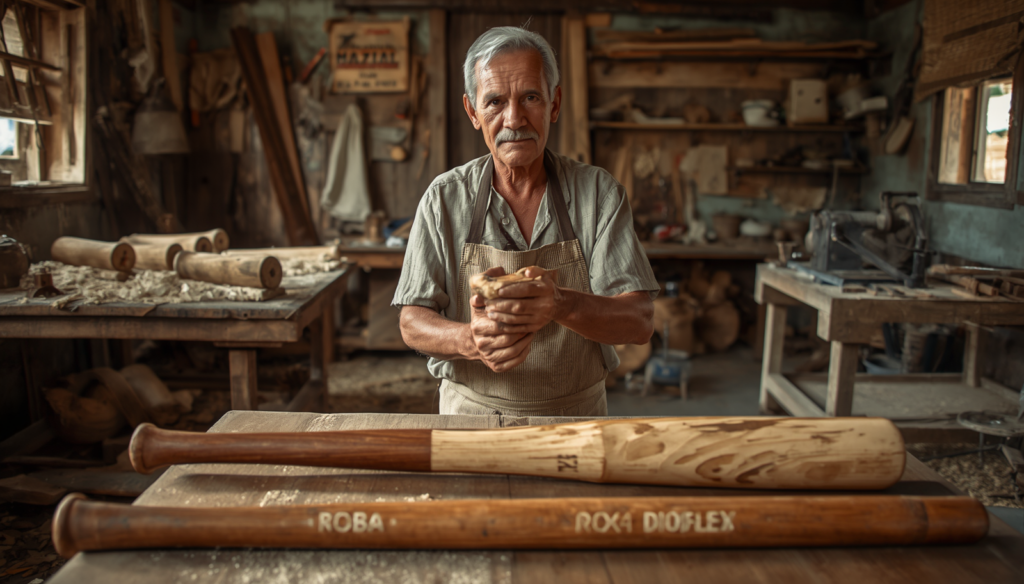
Figure 2. Roba / Diosflex Wood-Fiber Bats
Innovation 2: Roba / Diosflex Wood-Fiber Bats — A Craftsman’s Import Substitution Revolution
Table 5. Roba / Diosflex Wood-Fiber Bats
| Aspect | Details |
|---|---|
| Developer | Claudio Roba — self-taught craftsman from Pinar del Río |
| R&D Duration | Six years of research and experimentation |
| Production Start | Late 2014 |
| Production Process | Extracting fine wood fibers, combining with resin-based adhesive, molding under pressure, “baking” at over 100°C, then shaping on a lathe; uses scrap materials from other processes, not dependent on large hardwood supplies; entirely handcrafted |
| Two Brands | Roba and Diosflex — differentiated by elasticity; Diosflex has higher elasticity to prevent breakage |
| Applications | Used by Cuba’s national team training for the 2007 Rio de Janeiro Pan American Games; 800 bats produced for the 2008 National Baseball Series; used by Cuban stars including Alfredo Despaigne, Osmani Urrutia, Yoenis Céspedes; custom-made to each player’s body type, weight, and hand shape |
| Uniqueness | Cuba’s first wood-fiber bat; more durable than traditional wooden bats — does not break or crack during training; solved Cuba’s reliance on imported bats |
Origin Story: Six Years of a Craftsman’s Dedication
Claudio Roba’s story is one of quiet determination. A self-taught carpenter from Pinar del Río — Cuba’s westernmost province — Roba had no formal engineering training. But he had a vision: to create a baseball bat that could rival imported models, using only materials available in Cuba.
For six years, Roba experimented. He tried different woods, different adhesives, different curing processes. His workshop — a modest space filled with wood shavings and hand tools — became his laboratory. His goal was not just to create a bat, but to create a bat that could replace imports.
The breakthrough came when he began extracting fine wood fibers and combining them with a resin-based adhesive. The mixture was molded under pressure, then “baked” at over 100 degrees Celsius — a process that fused the fibers into a dense, resilient material. Finally, the rough form was shaped on a lathe, yielding a bat that was both light and durable.
“In 2008, I produced 800 bats for the National Baseball Series. Many were custom-made — adapted to each player’s body type, weight, and hand shape. This should be the norm — creating bats based on the player’s physical and mechanical characteristics, not making the player uncomfortable in the batter’s box.”
— Claudio Roba
The Roba and Diosflex brands were born. The difference between the two? Elasticity. Diosflex bats have a slightly higher elasticity, making them more resistant to breaking — a crucial feature for aggressive hitters.
Table 6. Roba/Diosflex Bats — Impact on Cuban Baseball
| Impact Area | Description |
|---|---|
| Import Substitution | Before Roba’s bats, Cuba relied heavily on imported bats — a significant expense in a country with limited foreign currency |
| Cost Reduction | Cuban baseball saved thousands of dollars annually by using domestically produced bats |
| Customization | Players could now train and compete with bats tailored to their specific physique and swing mechanics |
| Durability | Wood-fiber bats do not crack or break like traditional wooden bats, reducing replacement costs and player frustration |
| National Pride | Cuban players no longer had to rely on foreign-made equipment to compete at the highest level |
Table 7. Roba/Diosflex Bats — Distribution
| User/Team | Status |
|---|---|
| Cuban National Team | Used in preparation for the 2007 Pan American Games |
| National Baseball Series | Over 800 bats produced for the 2008 season; continues to supply the league |
| Star Players | Alfredo Despaigne (Cuba’s all-time home run leader), Osmani Urrutia, Yoenis Céspedes have all used Roba/Diosflex bats |
| Youth Teams | Integrated into training programs nationwide |
| International Interest | Some Dominican players have expressed interest in the product |
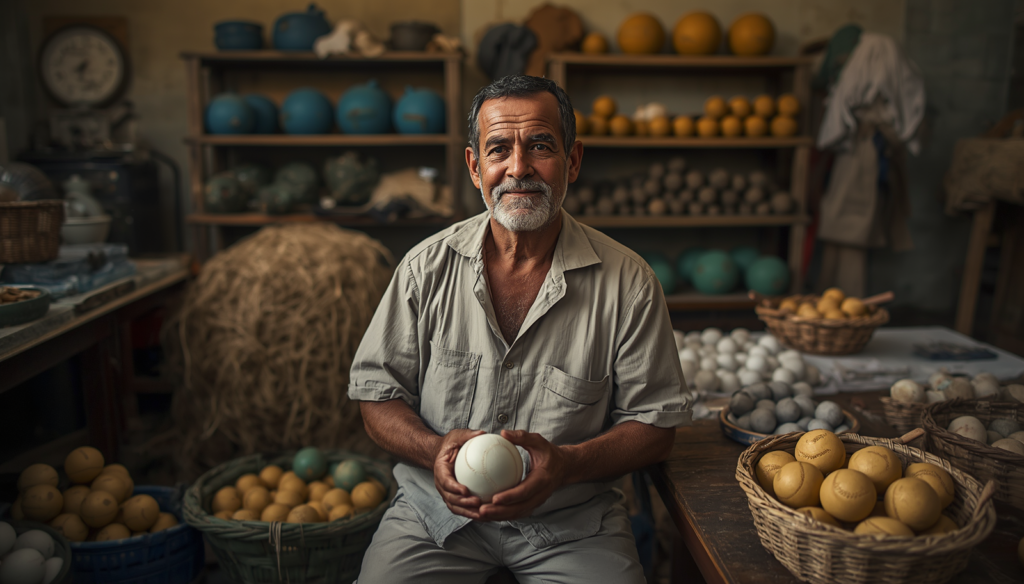
Figure 3. Multi-Purpose Rubber Training Balls
Innovation 3: Multi-Purpose Rubber Training Balls — Three Decades of Craftsmanship
Table 8. Multi-Purpose Rubber Training Balls
| Aspect | Details |
|---|---|
| Developer | Francisco Javier Carbonell — former Cuban baseball and softball national team player |
| R&D Duration | Over 30 years of continuous development |
| Materials | Rubber, polyurethane (PVC) |
| Production Method | Entirely handcrafted |
| Lifespan | Over 5 years of high-intensity use |
| Applications | Used by most Cuban provinces for pitcher and player training; used by coaches in multiple Latin American countries for methodology work; hundreds produced for the 60th National Baseball Series |
| Honors | Awarded at the National Baseball School Science Conference; received the “Most Economic Impact Award” ; recognized at the 8th International AFIDE Congress; received the Inder Annual Science Award “José Yáñez Ordaz” for Best Innovator (2018) |
Origin Story: A Player’s Frustration Becomes a Craftsman’s Mission
Francisco Javier Carbonell’s journey began not in a laboratory or a factory, but on a baseball field — and in frustration.
As a former Cuban national team player — in both baseball and softball — Carbonell knew firsthand the challenges of training with limited resources. In the 1990s, the Cuban baseball system faced critical shortages: training balls were scarce, and imported equipment was expensive and hard to come by.
“We needed balls that could withstand daily training, that could be used for multiple purposes — but the supply just wasn’t there.”
Carbonell decided to solve the problem himself. He began experimenting with rubber and polyurethane (PVC) — materials that were more readily available in Cuba. His workshop was simple: a small space, a thermal machine for curing, and a growing collection of molds and tools. But his commitment was extraordinary.
For over thirty years, Carbonell has been handcrafting training balls — each one carefully designed for a specific purpose. The balls come in different sizes, weights, and colors, each color corresponding to a different application:
- Blue or green balls for infield practice
- Yellow or white balls for throwing drills
- Small balls for youth training
- Regulation-sized balls for official practice
The rubber balls have a lifespan of over five years — an extraordinary durability that dramatically reduces training costs. The balls can be used for:
- Pitcher training (including throwing accuracy and delivery)
- Hitter warm-ups
- Fielding practice (infield and outfield)
- Catcher drills
- Basket drills (for ball collection and repetition)
“Carbonell has been making rubber, polyurethane, and PVC balls for thirty years. Their durability has reduced training costs across Cuban baseball.”
— Cuban sports media
Table 9. Rubber Training Balls — Impact on Cuban Baseball
| Impact Area | Description |
|---|---|
| Cost Reduction | A similar training ball in the international market costs $7.20 — Carbonell’s locally made balls are significantly cheaper, saving Cuba thousands of dollars annually |
| Durability | Each ball lasts over 5 years — reducing replacement frequency and long-term costs |
| Versatility | One set of balls can serve multiple training needs — pitching, hitting, fielding, and catcher drills |
| Availability | Cuban teams no longer need to rely on imported training balls to maintain their practice schedules |
| National Recognition | Carbonell’s work has been recognized with multiple national awards and accolades |
Table 10. Rubber Training Balls — Distribution
| Region/User | Adoption Status |
|---|---|
| Cuban Provinces | Most provinces use Carbonell’s balls for baseball training |
| National Baseball Series | Hundreds of balls supplied for the 60th Series |
| Latin America | Coaches in multiple Latin American countries use his balls in their methodology work |
| Youth Baseball | Integrated into training programs nationwide |
| Softball | Also used in Cuban softball training programs |
Table 11. Rubber Training Balls — Awards and Recognition
| Year | Award/Recognition |
|---|---|
| 2018 | Inder Annual Science Award “José Yáñez Ordaz” — Best Innovator |
| 2017 | Most Economic Impact Award — National Baseball School Science Conference |
| 2016 | Recognition at the 8th International AFIDE Congress |
| Multiple | Awards at provincial and national science conferences |
Cuba Baseball Innovation Timeline
Table 12. Cuba Baseball Innovation Timeline
| Year | Milestone |
|---|---|
| 2007 | Roba wood-fiber bats used for Cuba’s Pan American Games training |
| 2008 | Claudio Roba begins production; 800 bats supplied to the National Baseball Series |
| Late 2014 | Roba/Diosflex bats enter full-scale production |
| 2017 | WBSC officially launches Baseball5; first official tournament in Havana |
| 2018 | Carbonell receives Inder Annual Science Award for Best Innovator |
| 2022 | Cuba wins inaugural Baseball5 World Cup undefeated |
| 2024 | Cuba repeats as Baseball5 World Champions, undefeated |
| 2026 | Baseball5 to debut at Dakar Youth Olympic Games |
Why Cuba Leads in Innovation Under Resource Constraints
Table 13. Cuba’s Innovation Advantages Under Resource Constraints
| Advantage | Explanation |
|---|---|
| “Grassroots Innovation” Spirit | Cuba’s innovations often come from the ground up — a craftsman, a former player, a coach — not from laboratories or corporations. This bottom-up innovation model is unique in global baseball |
| Import Substitution Imperative | Foreign currency shortages force Cubans to replace imported products with local ingenuity — Roba’s bats and Carbonell’s balls are direct products of this necessity |
| Street Culture Creativity | Cuba’s streets gave birth to Baseball5, a global sport. From “cuatro esquinas” to Olympic inclusion, Cuba proves that the simplest games can have the most ambitious futures |
| Craftsmanship Heritage | Roba and Carbonell are self-taught craftsmen — their success proves that without formal engineering education, practice, persistence, and creativity can still produce world-class innovation |
References
- Baseball5. (n.d.). Ecured. https://www.ecured.cu
- Cuba manufactures multipurpose baseball balls. (n.d.). CubaSi. https://cubasi.cu
- From the streets of Havana to the World Stage: Reinaldo Batista Fernandez and the spirit of Baseball5. (2025, September 23). World Baseball Softball Confederation. https://www.wbsc.org
- Garantizan producción de pelotas para la Serie Nacional de Béisbol. (2020, July 10). Radio Reloj. https://www.radioreloj.cu
- Los bates irrompibles de Claudio Roba. (n.d.). BeisbolEnCuba.com. https://www.beisbolencuba.com
- The homerun man. (2017, May 16). Granma. https://en.granma.cu