
The World’s First Systematic Pitching Technique Evolution System
Japan’s evolution of pitching techniques is not merely a story of rule changes; it is a century‑long journey of systematic innovation that intertwined regulation adjustments with biomechanical refinements. This Gallery
explores how Japanese baseball transformed its pitchers from underhand throwers to global icons of precision and control, through four distinct dimensions of innovation.
Table 1. Gallery Overview
| Item | Details |
|---|---|
| Full Title | Japan’s Pitcher’s Mound and Pitching Technique Evolution System (1870s – Present) |
| Time Span | 1870s – Present |
| Core Impact | Shaped the distinctive Japanese style of “precision control and varied pitch sequencing,” laying the foundation for world‑class pitchers |
| Key Rule Milestones | 1895 (overhand pitching legalized), 1905 (mound introduced), 1941 (step‑back rule), 1956 (strike zone narrowed), 1988 (mound lowered) |
| Representative Outcomes | Hideo Nomo, Ichiro Suzuki, Shohei Ohtani, Yoshinobu Yamamoto, and other world‑class pitchers |
| Uniqueness | The first case in global baseball history where rule adjustments and technical movements co‑evolved systematically to shape a distinct pitching style |
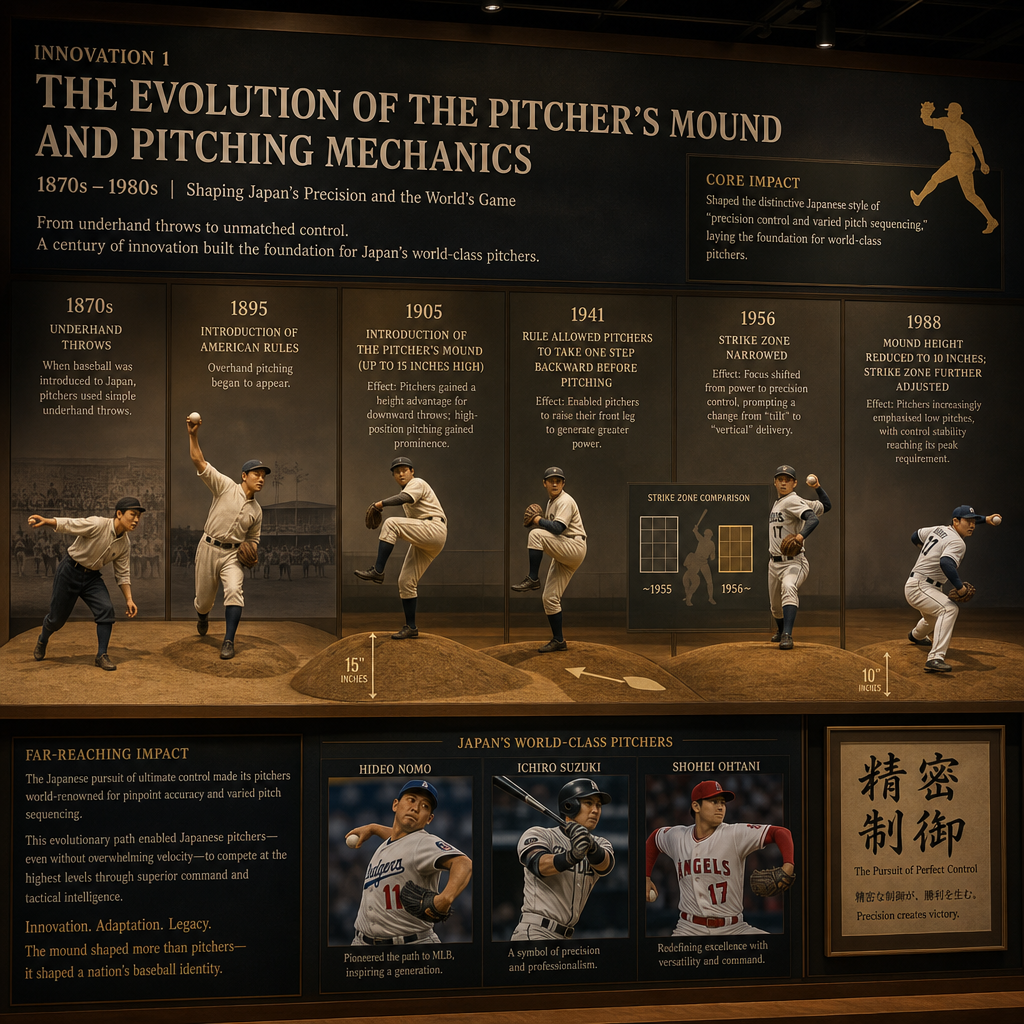
Figure 1. Historical Evolution of Japan’s Pitching Mechanics
About This Gallery
Japan’s pitcher’s mound and pitching technique evolution represents a century‑long systematic achievement in sports technology innovation — the first case in global baseball history where rule adjustments and technical movements co‑evolved systematically to shape a distinct pitching style. However, Japan’s innovation in pitching extends far beyond this. From the physical environment of the mound, to the philosophical system of training methods, to the scientific analysis of biomechanics, Japan has built a multi‑layered, comprehensive pitching technology ecosystem — many of whose innovations are unique in the world.
When baseball came to Japan in the beginning of the 1870s, the pitcher had to pitch the ball in an easy underhand motion. In 1895, American rules were translated into Japanese for the first time — the history of overhand pitching started at this time. However, there was no pitcher’s mound; therefore, the pitcher had to generate the power of the ball by himself. As a result, a torso movement that inclined toward second base, and then inclined toward home base, developed.
Over the following century, Japanese baseball continuously drove the evolution of pitching techniques through a series of rule adjustments — from changes in mound height, to the allowance of the step‑back motion, to repeated adjustments of the strike zone. Each rule change gave rise to new pitching techniques, and new techniques in turn influenced further rule adjustments. This interactive model of rule‑and‑technique co‑evolution is truly unique in global baseball history.
“This revision gives freedom to the pitcher’s motion and allows him to apply more power than before when pitching.”
— Kenzo Hirose, Preface to Japanese Baseball Rules (1941)
Japan’s Pitching Innovation: Four Unique Dimensions
Japan’s innovation in pitching is distinguished by four mutually reinforcing dimensions — together forming a complete system that other baseball nations have found difficult to replicate.
Dimension 1: A Century of Rule‑and‑Technique Interaction — A Globally Unique Pitching Evolution Model
Japan’s pitching technique evolution was driven step by step through a series of rule adjustments. The following are four key rule changes and the technical transformations they brought:
Table 2. Key Rule Changes and Their Technical Impact
| Year | Rule Change | Technical Impact |
|---|---|---|
| 1905 | Pitcher’s mound introduced, maximum 15 inches (approx. 38 cm) | Pitchers gained a height advantage for downward throws; high‑position pitching gained prominence; torso inclination toward home plate was emphasized |
| 1941 | Pitchers permitted to step back behind the pitcher’s plate before pitching | Pitchers could raise their leg extremely high to generate greater driving force; a follow‑up movement developed — twisting the torso toward second base and then back toward home base |
| 1956 | Strike zone reduced from “shoulder to knee” to “armpit to knee” | Focus shifted from power to precision control; pitching motion changed from “inclined” to “vertical” torso movement |
| 1988 | Mound height reduced from 15 inches to 10 inches (25.4 cm) | Pitchers increasingly emphasised throwing low; control stability reached its peak requirement; the twisting motion toward second base became ineffective; new arm and leg movements developed |
Additional Notes on the 1905 Mound Introduction:
In 1905, Waseda University’s baseball team traveled to the United States and officially introduced the pitcher’s mound to Japan upon their return. Before this, there was no pitcher’s mound on Japanese fields — pitchers had to throw on flat ground. The introduction of the mound gave pitchers a significant height advantage, allowing them to throw downward from an elevated position.
At the same time, the strike zone during this period was identified between a batter’s knees and shoulders on the basis of a vertical posture; a speedball up to the height of the shoulder was a good ball. To throw that kind of ball, torso inclination toward home plate was required.
Additional Notes on the 1941 Step‑Back Rule:
Before 1941, pitchers had to keep both feet on the pitcher’s plate before pitching. In February 1941, the Japanese Baseball League Rules Committee met and decided to adopt the Japanese Baseball Rules, based on the 1940 American rule revisions. The new rule permitted pitchers to step back behind the pitcher’s plate before stepping toward home base.
This change enabled pitchers to raise their leg up extremely high, generating more powerful driving force. To generate this power, a follow‑up movement developed — the twisting of the torso toward second base and then back toward home base.
Additional Notes on the 1956 Strike Zone Narrowing:
In 1956, the upper limit of the strike zone was lowered from the “shoulder” to the “armpit”. This meant that fastballs at shoulder height were no longer called strikes. Pitchers had to throw lower, and throwing to the lowest height became the most important factor.
As a result, the inclining torso movement that had been seen since the beginning became ineffective. Pitching motion changed from “inclined” to “vertical” torso movement. The pitcher’s objective shifted from creating big power pitches to stabilizing control.
Additional Notes on the 1988 Mound Lowering:
Major League Baseball lowered the mound height from 15 inches to 10 inches as early as 1969, but Japan did not follow until 1988. For nearly 20 years before that, Japanese pitchers had been throwing from mounds 13 centimeters higher than their American counterparts.
In 1988, Nippon Professional Baseball (NPB) officially reduced the mound height to 10 inches. The following year, the upper limit of the strike zone was further lowered from “armpit” to “the horizontal line at the midpoint between the top of the shoulder and the top of the uniform pants”. In 1997, the lower limit of the strike zone was further lowered to beneath the kneecap.
These adjustments made pitchers place even greater emphasis on control — throwing the lowest ball became the most important subject. To throw a lower ball, stability of movement was taken into consideration. This resulted in the twisting motion toward second base — seen since the 1940s — becoming ineffective for the first time. New arm and leg movements developed, such as a forward step with a twisting inward motion, a backswing whilst lifting an elbow, and a forward swing with a torsion movement.
Final Result: The vertical torso movement and the twisting direction toward home base became the conventional movement technique of modern‑day overhand pitching.
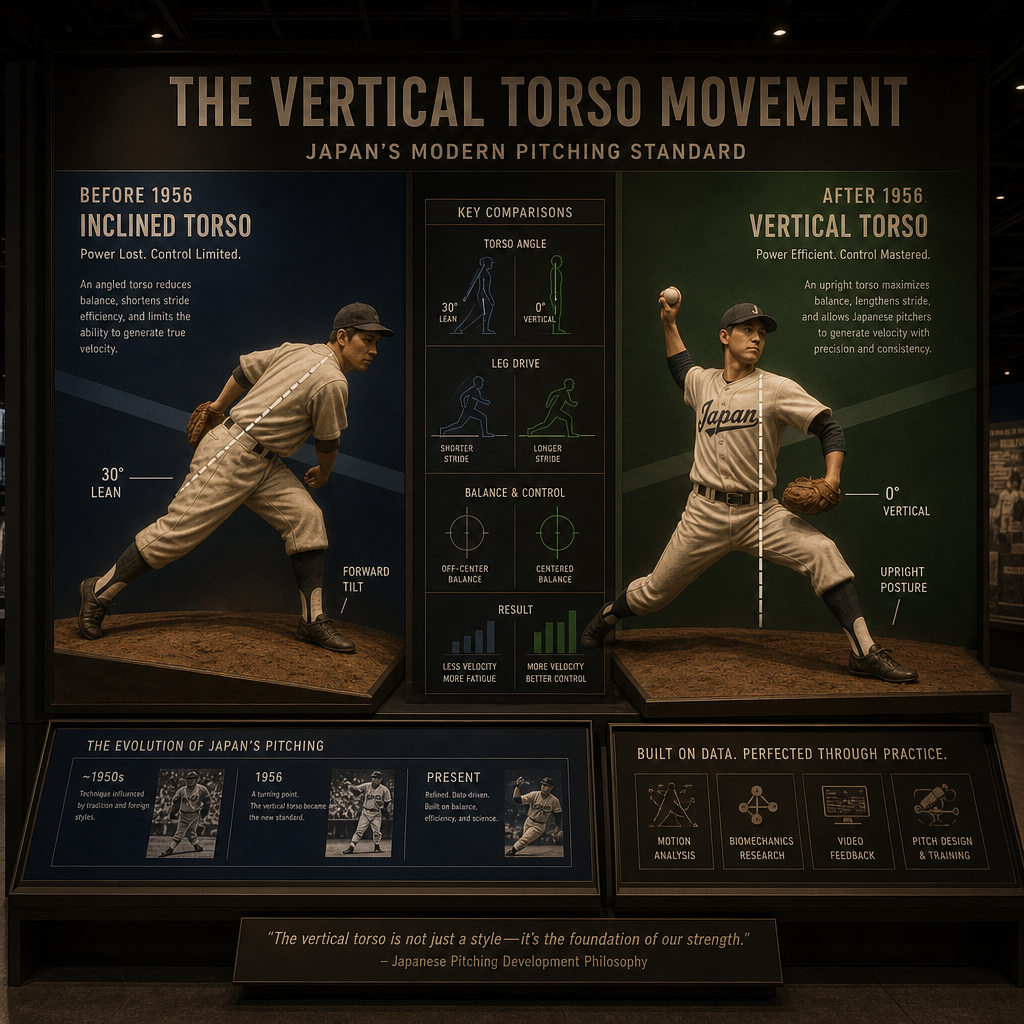
Figure 2. The “Vertical Torso Movement” — Japan’s Modern Pitching Standard
Dimension 2: Unique Training Philosophy and Method Innovation — From the “BC Training Method” to the “Balance Board”
If rule evolution is the “hardware foundation” of Japanese pitching technique, then Japan’s new unique training methods are its “software core.” Japan has developed a training philosophy for pitchers that is fundamentally different from the traditional Western approach of strength training.
Innovation: Yoshinobu Yamamoto’s “BC Training Method” — Throwing 160 km/h Without Weightlifting
Yoshinobu Yamamoto — the 2024 World Series MVP and Dodgers ace — stands only 178 cm tall with a modest build, yet he consistently throws fastballs approaching 160 km/h. His secret lies in the “BC Training Method” he has practiced for years, designed by his trainer Osamu Yada.
This method, built around the core concepts of “Breath,” “Bar,” “Bowl,” “Board,” and “Bridge,” uses posture control, center‑of‑gravity transfer, and breath regulation to create hundreds of training variations. Most strikingly: this method completely abandons traditional weight training.
Yada explains the philosophy behind this approach: “It’s easy to use one muscle at 100% output. But what Yoshinobu is trying to do is to use 600 different muscles at 10% output.” This is the fundamental difference between Eastern philosophy and Western strength training — “pursuing harmony, not limits.”
Yamamoto’s daily training includes handstands, stretching, javelin throws, and breath control. He describes himself as “learning to let his body speak for itself.” The lightweight javelin Yada introduced was designed to flutter and fail if thrown with improper mechanics; over time, Yamamoto learned to launch it great distances with minimal effort, teaching him proper sequencing.
“Think about a tree. A tree has a trunk, it has branches, it has roots. In the sports world, we tell people to move their hands this way, their feet this way, and that’s just moving the branches. The most important thing with the tree is the trunk.”
— Osamu Yada, Yamamoto’s biomechanist
This training method has upended the global baseball establishment’s traditional belief that “pitchers must lift weights” and has attracted widespread attention in MLB. Dodgers scouts visited Yada’s Osaka clinic in 2023 before the team signed Yamamoto to a 12‑year, $325 million contract. “Watching people work at his clinic in Osaka is special,” said Galen Carr, the Dodgers’ vice president of player personnel. “They do things with their bodies — contortions and twisting and balance and strength — and it’s body weight, not stuff we do here. And somehow that kid throws 98 and he’s 5‑10. … Maybe we can learn something from him.”
Innovation: The “Balance Board” Pitching Training Method — Masahiro Tanaka’s “Magical Transformation”
Another unique innovation in Japanese pitching training is the use of a balance board to correct pitching mechanics. This method gained widespread recognition through Masahiro Tanaka’s use of it.
The method involves performing shadow pitching on a board approximately 50 cm wide, 150 cm long, and 20 cm high. If a pitcher cannot step straight forward, they lose balance and fall off. This forces the pitcher to develop a straightforward stepping motion, ensuring that lower‑body power transfers to the upper body without loss.
Kunio Kōda, manager of Kyushu Bunka Gakuen High School, introduced this method and had a local carpenter custom‑build similar balance boards and inclined boards for training. He said: “Even without actually throwing, using shadow pitching to solidify mechanics is a good thing. In today’s era, players can also confirm their mechanics by looking in a mirror or recording with a phone.”
Innovation: Hōtoku Gakuen’s “Weekly 500 Pitches” and “Three‑Distance” Training
Hōtoku Gakuen — a powerhouse high school baseball program in Hyōgo Prefecture — has developed a systematic method for pitcher development. The school achieved its first championship in 16 years at the Spring Kinki Regional High School Baseball Tournament, with its pitching staff overcoming long‑standing control issues.
One of its core methods is “weekly 500‑pitch” throwing practice — which exactly matches the pitch count limit imposed on high school pitchers in official games. By having pitchers simulate the throwing load of official games in practice, they develop the ability to sustain performance through high‑intensity games.
In addition, Hōtoku Gakuen implements “three‑distance catch play” — throwing at different distances to help pitchers understand how the ball’s trajectory changes at different distances, enabling them to adjust their pitching based on daily conditions during games.
Okinawa Shōgaku High School has a similar innovation — setting markers every 5 meters from 30 to 60 meters for catch play, helping pitchers “understand at what distance they can throw quality pitches.”
Dimension 3: Leadership in Biomechanical Analysis — From “Being Taught by America” to “Being Sought by America”
The most remarkable achievement of Japan’s innovation in pitching is the reversal — from “learning from America” to “being sought by America.”
Next Base: The Japanese Company Actively Sought by the MLB Chicago Cubs
In September 2024, news that stunned the baseball world broke: Next Base, a Japanese startup, signed a pitching biomechanics support contract with the Chicago Cubs of Major League Baseball. This was stunning because new baseball concepts and training methods have tended to originate in the United States before making their way to Japan — this time, the direction was reversed.
Founded in 2014, Next Base combines cutting‑edge measurement systems with sports science expertise to provide detailed assessments of a player’s physical strength, pitching mechanics, and swing motion. In August 2022, the company opened the Next Base Athletes Lab in Ichikawa, Chiba Prefecture.
The lab is equipped with state‑of‑the‑art measurement technology and expert analysts. Principal researcher Dr. Tsutomu Jinji — who holds a PhD in pitching biomechanics — explains: “We provide pitching biomechanics services, including finger movement on the ball, by capturing and analyzing whole‑body motion.” The company attaches 48 reflective markers to body parts including fingernails, joints, and wrists, and captures movement with 14 cameras. This ability to measure even finger‑tip movements is the company’s unique innovation.
So why did an MLB team actively seek out a Japanese company?
The answer: America is facing a crisis of pitcher elbow injuries — Tommy John surgeries are increasing. In contrast, Japan has significantly fewer pitchers suffering from elbow issues. Cubs General Manager Jed Hoyer visited the Next Base Athletes Lab during his September 2023 trip to Japan. Before leaving Japan, he told the Next Base team that visiting the Athletes Lab had been the most fascinating part of his trip.
“The Cubs’ staff were particularly focused on injury prevention for pitchers. In recent years, more and more pitchers in the United States have suffered elbow injuries, leading to an increase in Tommy John surgeries. Compared to the United States, Japan has fewer pitchers suffering from elbow issues, which sparked their interest in our research and training methods.”
— Dr. Tsutomu Jinji, Principal Researcher at Next Base
Japan’s Deep Accumulation in Biomechanics Research
Japan’s leadership in pitching biomechanics is no accident. The Japanese sports science community has conducted systematic biomechanical research on pitching motions, including classification studies of four pitching styles among Japanese pitchers, as well as research on the relationship between pivot‑foot rotation, pelvic rotation, and trunk separation. Additionally, Japanese research projects employ theoretical physics deductive methods to study pitching and batting motions, collaborating with high school and university baseball teams to validate theories and develop coaching methods.
These studies provide a solid scientific foundation for Japan’s continuous innovation in pitching techniques.
Dimension 4: The Unique Mound Environment — Soft Soil Shaping a Distinctive Technique
Japan has another often‑overlooked but critical innovation: the uniqueness of mound soil composition.
Japanese mounds are made of a softer, more powdery dirt. Japanese pitchers excel at utilising the soft mound — bearing weight on the pivot foot and springing from the lower body — while foreign pitchers are accustomed to hard mounds — straightening the legs and throwing with upper‑body power.
Many foreign pitchers who come to Japan are confused by the “softness of the mound.” Japanese pitchers, after stepping onto the mound, often use their cleats to dig grooves at the landing point to stabilise their motion. Conversely, Japanese pitchers going to MLB often find the hardness of the mound uncomfortable.
This difference in mound environment has shaped fundamentally different technical styles between Japanese and American pitchers. In recent years, some Japanese ballparks have begun switching to MLB‑specification hard soil — Koshien, Mazda Stadium, Nagoya Dome, and Tokyo Dome before the 2019 season all made the change. This has raised concerns: will Japanese pitchers’ injury risk increase as a result?
Interestingly, there is even a Japanese patent related to elevator‑style mounds that can be raised and lowered automatically in multi‑purpose venues — showing that Japan continues to innovate at the “infrastructure” level of the mound as well.
Origin Story: Where Rule Translation and Technology Introduction Converged
The evolution of Japan’s pitching technique began with a pivotal moment of cultural translation in 1895.
That year, American competitive rules were translated into Japanese for the first time, including provisions allowing “overhand pitching.” Before this, pitchers could only throw with simple underhand motions. This translation opened a century‑long journey of technical evolution.
However, Japanese fields at the time had no pitcher’s mound — pitchers had to throw on flat ground. This meant pitchers had to generate power entirely through their own body movements. Thus, the “reaction” motion of the torso — inclining toward second base and then toward home base — became the earliest core technique.
In 1905, Waseda University’s baseball team travelled to the United States and officially introduced the pitcher’s mound to Japan. From then on, pitchers gained the height advantage of throwing downward from an elevated position. This combination of facility introduction and rule translation laid the foundation for the independent evolution of Japanese pitching technique.
Each subsequent rule adjustment — the 1941 step‑back rule, the 1956 strike zone narrowing, the 1988 mound lowering — was a recalibration of the previous technical balance. This rule‑driven, technique‑feeding‑back interactive model gave Japanese pitching technique a development path that was both connected to and distinct from American baseball.
Far‑Reaching Impact: Shaping the Distinctive Style of Japanese Pitchers
From Control to Sequencing — A Complete Evolution
The Japanese pursuit of ultimate control made its pitchers world‑renowned for pinpoint accuracy and varied pitch sequencing. This evolutionary path enabled Japanese pitchers — even without overwhelming velocity — to compete at the highest levels through superior command and tactical intelligence.
Continuous Production of World‑Class Pitchers
This century‑long evolution explains why Japan has consistently produced world‑class pitchers — from Hideo Nomo, who stunned MLB with his unique “tornado” delivery, to Ichiro Suzuki, to Shohei Ohtani, who is rewriting baseball history as a two‑way player, to Yoshinobu Yamamoto, who won World Series MVP in 2024. Behind them lies more than a century of accumulated pitching technique.
Differences Between Japanese and American Pitching Techniques
Japanese mounds were 13 centimetres higher than American mounds until 1988, and combined with the softer soil, this shaped different pitching styles — Japanese pitchers excel at bearing weight on the pivot foot and driving from the lower body; American pitchers rely more on hard mounds — straightening the legs and throwing with upper‑body power. This technical difference remains an important topic in Japan‑US baseball exchange.
Reversal of Innovation Direction
The most remarkable change is: the direction of innovation is reversing. In the past, Japan learned from America; today, Japanese pitching biomechanics technology, represented by Next Base, is being actively sought by MLB teams. This “reverse export” marks Japan’s transition from a “follower” to a “leader” in pitching science.
Table 3. Japan’s Pitching Innovation Timeline
| Year | Milestone |
|---|---|
| 1870s | Baseball introduced to Japan; pitchers used underhand motion |
| 1895 | American rules first translated into Japanese; history of overhand pitching begins |
| 1905 | Waseda University introduces the pitcher’s mound (maximum 15 inches) after US tour |
| Late 1920s | Waist twisting during arm swing becomes widespread |
| 1941 | Pitchers permitted to step back before pitching; high leg‑kick technique emerges |
| 1956 | Strike zone narrowed to “armpit to knee”; shift toward precision control |
| 1988 | Mound height reduced to 10 inches (Japan followed 19 years after MLB) |
| 1989 | Upper limit of strike zone further lowered |
| 1997 | Lower limit of strike zone lowered to beneath the kneecap |
| 2014 | Next Base founded in Tokyo |
| 2022 | Next Base Athletes Lab opens in Ichikawa, Chiba |
| 2024 | Next Base signs support contract with MLB Chicago Cubs |
| Present | “Vertical torso movement + twisting toward home base” becomes the standard technique for modern overhand pitching |
Table 4. Why Japan Leads in Pitching Innovation
| Advantage | Explanation |
|---|---|
| A Century of Rule‑Technique Interaction | Japan developed a globally unique pitching development model through nearly 130 years of rule adjustments and technical evolution — each rule change gave rise to new techniques, and new techniques fed back into rule adjustments |
| Unique Training Philosophy | From the “BC Training Method” (no weightlifting, pursuing harmony across 600 muscles) to the “Balance Board” correction method, Japan has developed a training system fundamentally different from Western traditional strength training |
| Global Leadership in Biomechanics | Japanese institutions like Next Base have reached world‑class levels in pitching motion analysis, actively sought by MLB teams |
| Facility Differences Shaping Technique | The softer soil of Japanese mounds shaped the unique Japanese style of pivot‑foot weight‑bearing and lower‑body driving |
| Systematic Technical Documentation and Research | Japan’s sports history community has conducted systematic historical research on pitching techniques, enabling clear recording and transmission of the evolutionary process |
References
- Baseball Japan. (2019, November 29). Japanese National high school body orders pitch limits for first time. https://www.baseballjapan.org
- ESPN. (2023, December 18). ‘He knows what he’s looking for’: How Yamamoto became baseball’s most coveted free agent. https://www.espn.com.au
- Fray, J. (2024, January 2). Dodgers pitching coach preparing to deploy more flexible training methods. Sports Illustrated. https://www.si.com
- Full-Count. (2026, February 13). 投手育成へ導入した田中将大の「魔改造」 下半身の力をロスなく活用…強豪校の斬新練習. https://full-count.jp
- Jiji Press. (2025, March 17). Japanese Company Helps Chicago Cubs with Pitching Form Analysis. https://sp.m.jiji.com
- Nakao, S. (2024, November 5). 〖日本企業初〗シカゴ・カブスとピッチング動作分析のサポート契約を締結! Next Base Inc. https://nextbase.co.jp
- Nippon.com. (2025, March 17). Captivating capture tech: Japanese motion analysis makes inroads in Major League Baseball. https://www.nippon.com
- Nippon.com. (2025, March 12). 「世界第一的動作分析」:日本運動科技的精髓獲得大聯盟認可. https://www.nippon.com
- RealGM. (2025, November 3). Yamamoto’s biomechanist credits unique training methods for Game 7. https://baseball.realgm.com
- Suzuki, N. (2017). 野球における投手のオーバースローの運動技術史 ―競技規則との関係から― [Historical research on movement techniques for overhand pitching in baseball — From the relationship with competition rules]. The Japan Journal of Sport History, 28. J‑STAGE. https://www.jstage.jst.go.jp
- The New York Times. (2009, July 8). Mound provides painful challenge to Japanese pitcher. https://www.nytimes.com