STRIKE Smart Baseball Gallery
World’s First Smart Baseball
Table 1. Gallery at a Glance
| Detail | Information |
|---|---|
| Full Name | STRIKE Smart Baseball (STRIKE 1.0 / STRIKE 2.0) |
| Developer | Jingletek (勁格貝爾運動科技股份有限公司), Tainan, Taiwan |
| Founded | 2016 |
| Founder & CEO | Ching Lun Lin (林敬倫) |
| First Patent Filed | August 18, 2016 (granted April 16, 2019) |
| CES Debut | CES 2021 (featured Taiwan Tech Arena startup) |
| Product Status | Mass production, exported internationally |
| Retail Price | ~$99 USD (original Kickstarter pre-order price) |
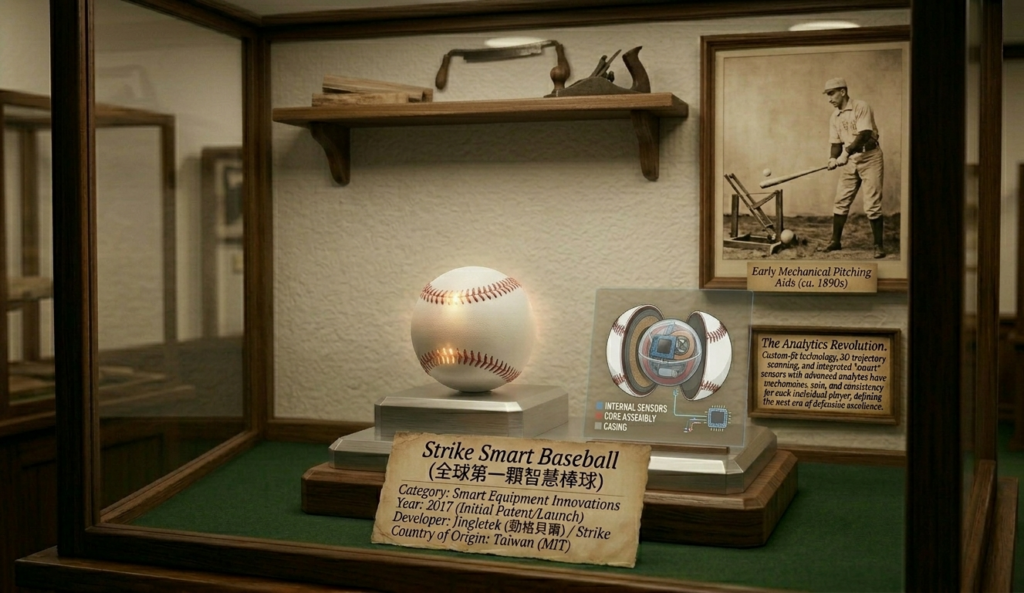
Figure 1. Exhibition Display of the STRIKE Smart Baseball (World’s First Internally-Sensored Baseball)
About the Gallery
The STRIKE Smart Baseball represents a landmark achievement in sports technology: the world’s first baseball with embedded sensors capable of measuring and transmitting real-time pitching data.
Developed in Tainan, Taiwan, STRIKE emerged from a deeply personal motivation. After Taiwan’s heartbreaking loss to Japan in the 2013 World Baseball Classic, founder Ching Lun Lin decided to transform frustration into innovation. His goal was simple but ambitious: create a tool that would help Taiwanese players be “seen” by international scouts through objective, quantifiable data.

Figure 2. Founder Portrait
“We want to make sure that Taiwanese players can be seen. Through data, we want to let international scouts see them directly. That is our original goal — to create the value of data.”
— Ching Lun Lin, Founder & CEO of Jingletek
Technical Specifications
| Specification | Detail |
|---|---|
| Dimensions | Official MLB size and weight |
| Materials | Cowhide leather, hand-stitching (matches regulation baseballs) |
| Sensors | Gyroscope, control chip, multiple precision sensors |
| Impact Resistance | Withstands pitches up to 162 km/h (~100 mph) |
| Connectivity | Bluetooth, wireless charging (no USB port) |
| Battery | Wireless rechargeable |
| Max Spin Measurement | Up to 4,000 rpm |
| Apps | iOS and Android dedicated apps |
| Data Visualization | 3D trajectory, slow-motion video with markers |
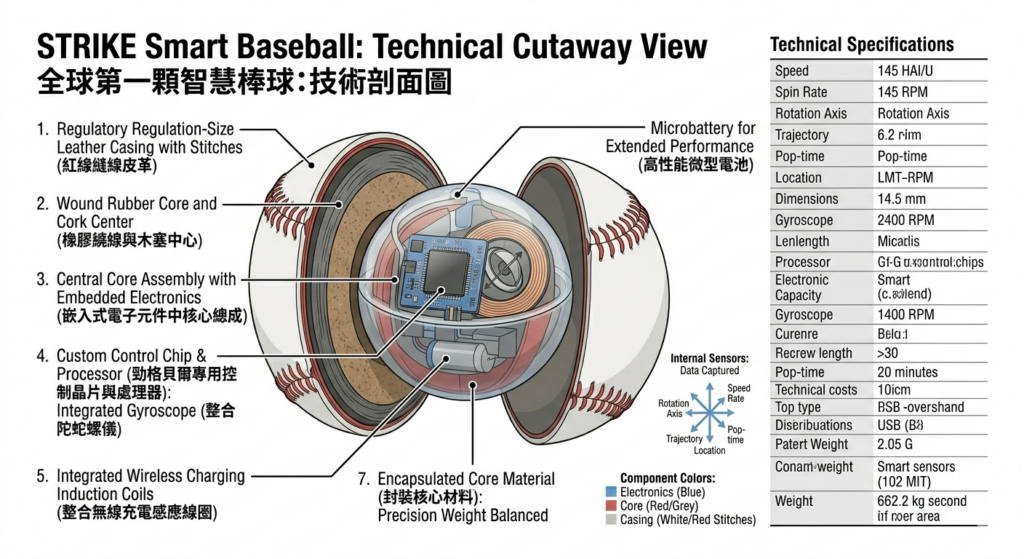
Figure 3. Technical Anatomy of the STRIKE Smart Baseball
The Challenge: Building a Smart Baseball
Developing a smart baseball presented unique engineering challenges that other smart balls (basketballs, soccer balls) did not face.
The Core Problem: Baseballs are solid, not inflated. Unlike a basketball that has air to cushion internal components, a baseball’s dense construction offers no protection for sensitive electronics during high-velocity impacts.
The Solutions:
| Challenge | Solution |
|---|---|
| Impact resistance | Extensive testing of shock-absorbing materials and structural designs; final product withstands 160km/h+ impacts |
| Weight and feel | Precision engineering ensures weight, center of gravity, and手感 match regulation baseballs |
| Charging | Wireless charging technology eliminates need for USB port, preserving surface integrity |
| Data accuracy | Executive VP Mike Hung set strict standards: accuracy matching high-speed cameras, 3,000 pitches at 120km/h with consistent data transmission |
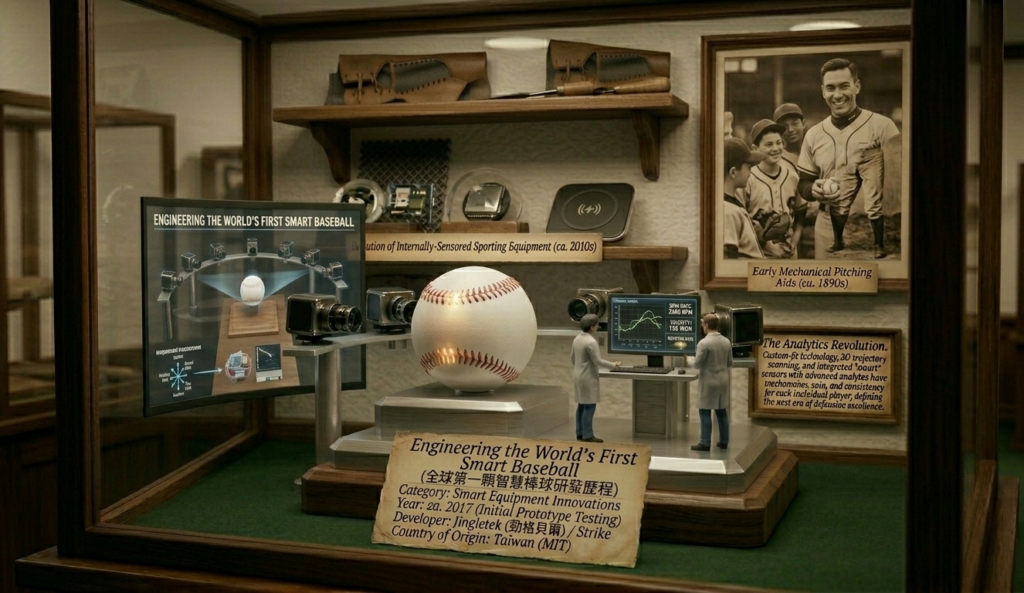
Figure 4: Engineering the Future — Laboratory Testing and Data Validation of the STRIKE Smart Baseball
Key Measurements
STRIKE captures five essential pitch metrics that enable comprehensive performance analysis.
| Measurement | What It Measures | Why It Matters |
|---|---|---|
| Spin Rate | Revolutions per minute of the baseball | Affects pitch movement and air resistance (Magnus force); MLB increasingly prioritizes this metric |
| Velocity | Speed of the pitch in km/h or mph | Fundamental performance indicator for pitchers |
| Trajectory | 3D flight path of the baseball | Reveals movement patterns that make batters miss |
| Location | Where the pitch crosses home plate | Precision pitching influences overall team strategy |
| Rotational Axis | The axis around which the baseball spins | Critical factor in pitch movement and control |
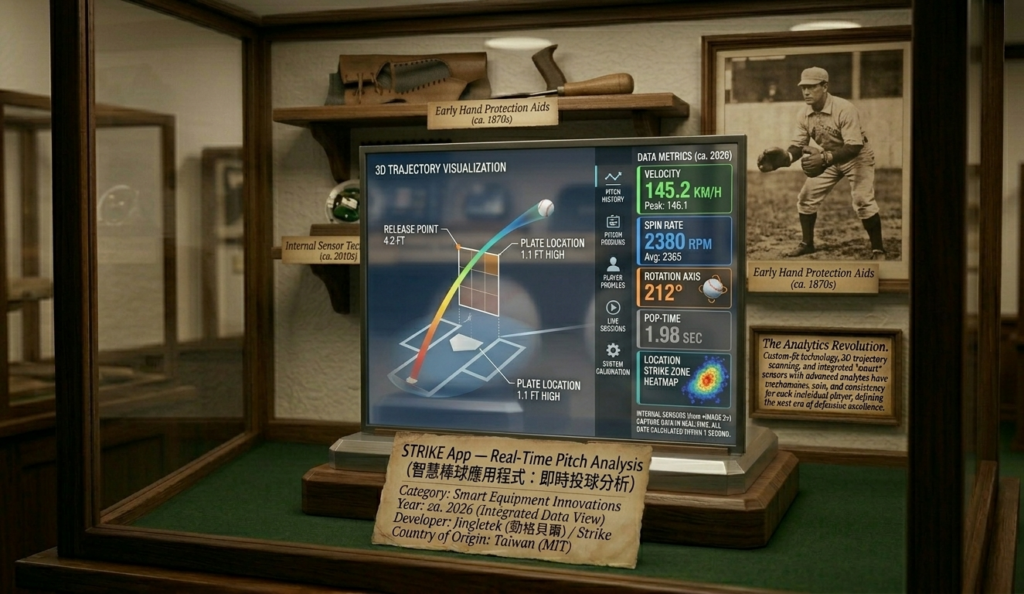
Figure 5. Real-Time Analytics — The STRIKE App Interface featuring 3D Trajectory Visualization and Pitch Metrics.
STRIKE 2.0: Expanding the Vision
Building on the success of STRIKE 1.0, which collected data from over 10,000 pitchers and more than 280,000 pitches, Jingletek launched STRIKE 2.0 to serve the entire defensive team.
New Features in STRIKE 2.0:
| Feature | Application |
|---|---|
| Pop-time for catchers | Measures catcher throw speed and release time to home plate |
| Infield throwing data | Tracks throw velocity and spin for infielders |
| STRIKE report system | Comprehensive analysis reports for coaches and scouts |
| Slow-motion video with markers | Frame-by-frame analysis with annotated positioning |
| Multi-user account management | Team-wide data tracking and comparison |
| Entertainment system | Gamified training experiences |
“We wish STRIKE 2.0 can support every coach with data which are hard to measure before, or help each player to record his own real-time condition.”
— Ching Lun Lin
The Origin Story: 2013 WBC as Catalyst
The 2013 World Baseball Classic served as the founding moment for STRIKE. Taiwan’s national team lost to Japan by a narrow margin, and the experience revealed a critical gap: while coaches could describe pitch movement using subjective language (“the ball really moves,” “it has good spin”), these descriptions could not be quantified, recorded, or communicated effectively.
“Many coaches use their own adjectives to describe feel and condition. But these things cannot be transmitted to another person, cannot communicate with players, cannot communicate with another coach. This is what we discovered — we should have data to simulate these things: how many rotations, what speed, leading to movement, dropping at the plate.”
— Ching Lun Lin
The vision was clear: create a standardized data language for baseball training.
Adoption and Distribution
| Market | Status |
|---|---|
| Taiwan | Available; used by youth, amateur, and professional teams |
| United States | Distributed through D-BAT (145+ locations across 24 states) |
| Japan | Available via Makuake crowdfunding platform |
| Global | Exported to major baseball-playing nations |
STRIKE first reached the market through successful crowdfunding campaigns on Kickstarter (US) and Makuake (Japan), with all orders fulfilled before moving to mass production.
Impact: Changing How Taiwan Trains
The adoption of STRIKE and similar sports science tools has transformed baseball training in Taiwan.
Before Sports Science: Training was subjective, based on coach observation and “feel.”
After STRIKE: Training is data-driven, measurable, and communicable.
Real Impact on Young Athletes:
Lin estimates that data-driven training reduces unnecessary pitches by approximately 15 per practice day. For a young pitcher practicing 20 days per month, that is 300 fewer pitches per month — significantly reducing arm fatigue and injury risk.
“For young kids especially, in the past they might throw dozens of balls per day. Now with precise numbers, once they reach their target they can rest. This better protects their bodies.”
— Ching Lun Lin
Coach Perspective: From Subjective to Objective
Chang Jung University baseball team head coach Lin Yu-chieh describes the transformation:
“In the past, coaching was relatively primitive, a more subjective teaching method. You might tell a pitcher they’ve improved, they’re throwing well — but the player doesn’t know where they’re good. But when you give them data, give them video, they know where their pitching motion is good, know their speed progressed from 130 to 135 to 140. Through data accumulation, they see their progress.”
— Lin Yu-chieh, Head Coach, Chang Jung University Baseball Team
Beyond STRIKE: Taiwan’s Sports Science Ecosystem
STRIKE did not emerge in isolation. It is part of a broader Taiwan sports science movement that includes:
| Organization | Focus |
|---|---|
| Basepara (貝思沛拉) | Taiwan’s first sports science baseball school; integrates motion capture, biomechanical analysis, fatigue monitoring, and injury prevention |
| National Sports Science Center | Government-funded research; developed Taiwan’s smart pitching machine with projection technology |
| ITRI (Industrial Technology Research Institute) | Developed Taiwan Hawk-Eye electronic strike zone system |
“The sports industry’s value can bring a new face to Taiwan. With more talented people, cross-disciplinary expertise in sports, technology, and business — plus students willing to participate, parents willing to support, and enterprises willing to invest — the possibilities are limitless.”
— Hsieh Ping-heng, Executive Director, Basepara
Why STRIKE Matters for Global Baseball
| Contribution | Significance |
|---|---|
| World’s First | First baseball with embedded sensors; no comparable product existed before 2016 |
| Standardization | Creates objective, replicable data language for pitching analysis |
| Accessibility | Consumer-level pricing (unlike $10,000+ professional systems) |
| Position Expansion | STRIKE 2.0 extends beyond pitching to catchers and infielders |
| Taiwanese Innovation | Demonstrates Taiwan’s capability to lead in sports technology |
References
- 中央廣播電臺. (2026, January 19). 運動科學引路 台灣棒球展新風貌. Rti.
- CTA Staff. (2021, April 21). Pitcher Perfect: Training with a Smart Baseball. CES.tech.
- Jingletek. (2021, January 12). CES 2021 Sports tech company Jingletek develops the world’s first Smart baseball. PRNewswire.
- 數位時代. (2017, January 4). 美日職棒都想要!台灣新創團隊 Jingle 打造全球第一顆智慧棒球「Strike」. TechNews.
- TechOrange. (2017, August 21). 台灣做出世界首顆「智慧棒球」!3000元台幣球速軌跡全分析. TechOrange.
- FINDIT. (2026). 勁格貝爾運動科技股份有限公司. 台灣新創募資第一站.
- CB Insights. (2016). Jingletek – Products, Competitors, Financials. CB Insights.
- 國家科學及技術委員會. (2021, December 11). TTA南臺灣新創國際論壇初試啼聲 打造在地新創DNA. NSTC.